

Planet Launches New Initiative on Planetary Security

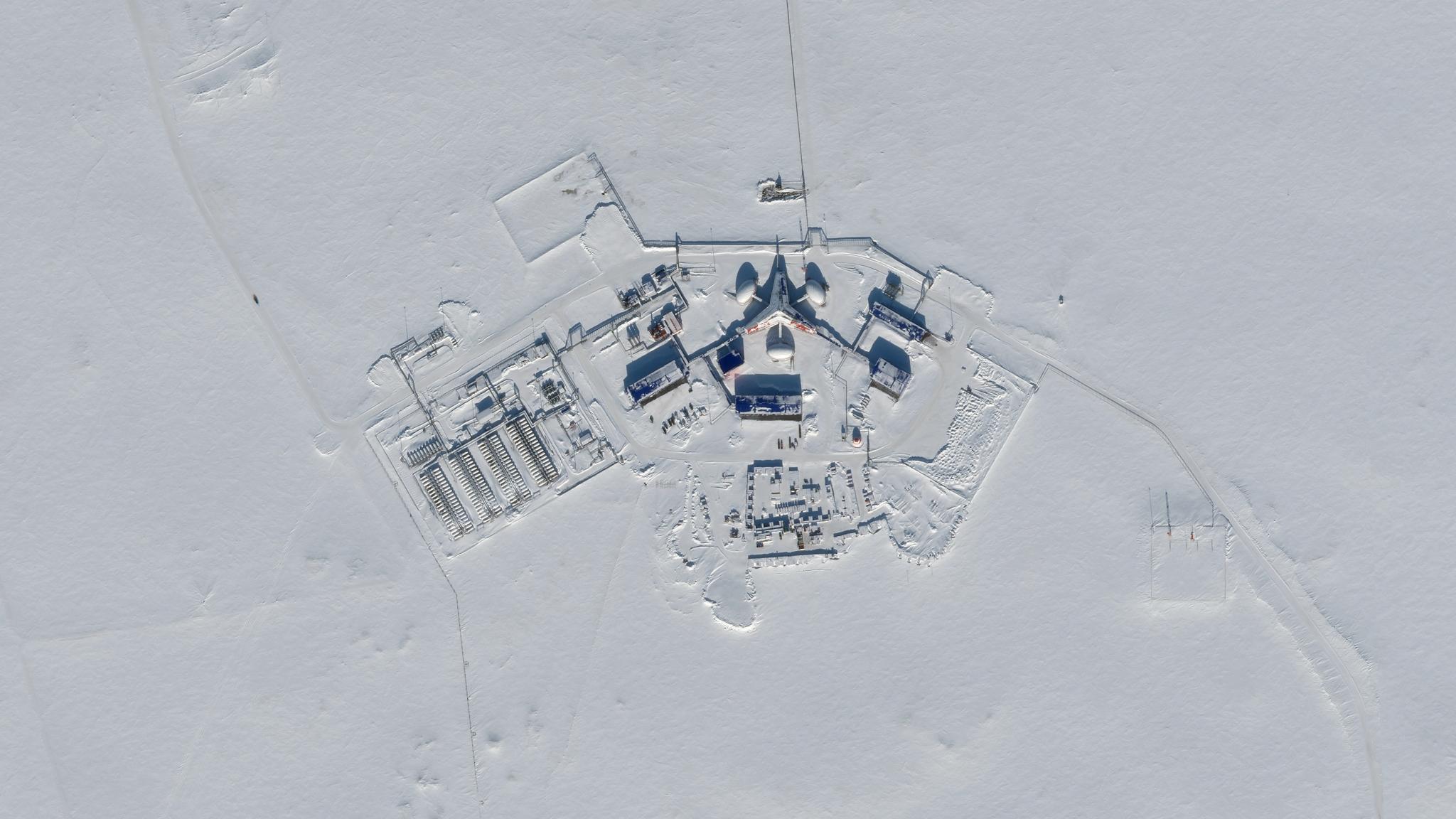
SkySat image of the Arkticheskiy Trilistnik (or “Arctic Trefoil”) base in Arkhangelsk Oblast, Russia, captured April 30, 2024. © 2024, Planet Labs PBC. All Rights Reserved.
NewsThis article was written by Andrew Zolli, Chief Impact Officer, and Andrew Hassanali, Manager, Ethics & Crisis Response
On a volatile and changing planet, the landscape of security risks is expanding, and our notion of security must expand with it.
This is the central premise behind our new Planetary Security Program, which uses Planet data and tools to help address a broad landscape of security concerns that are shaping 21st-century competition and conflict.
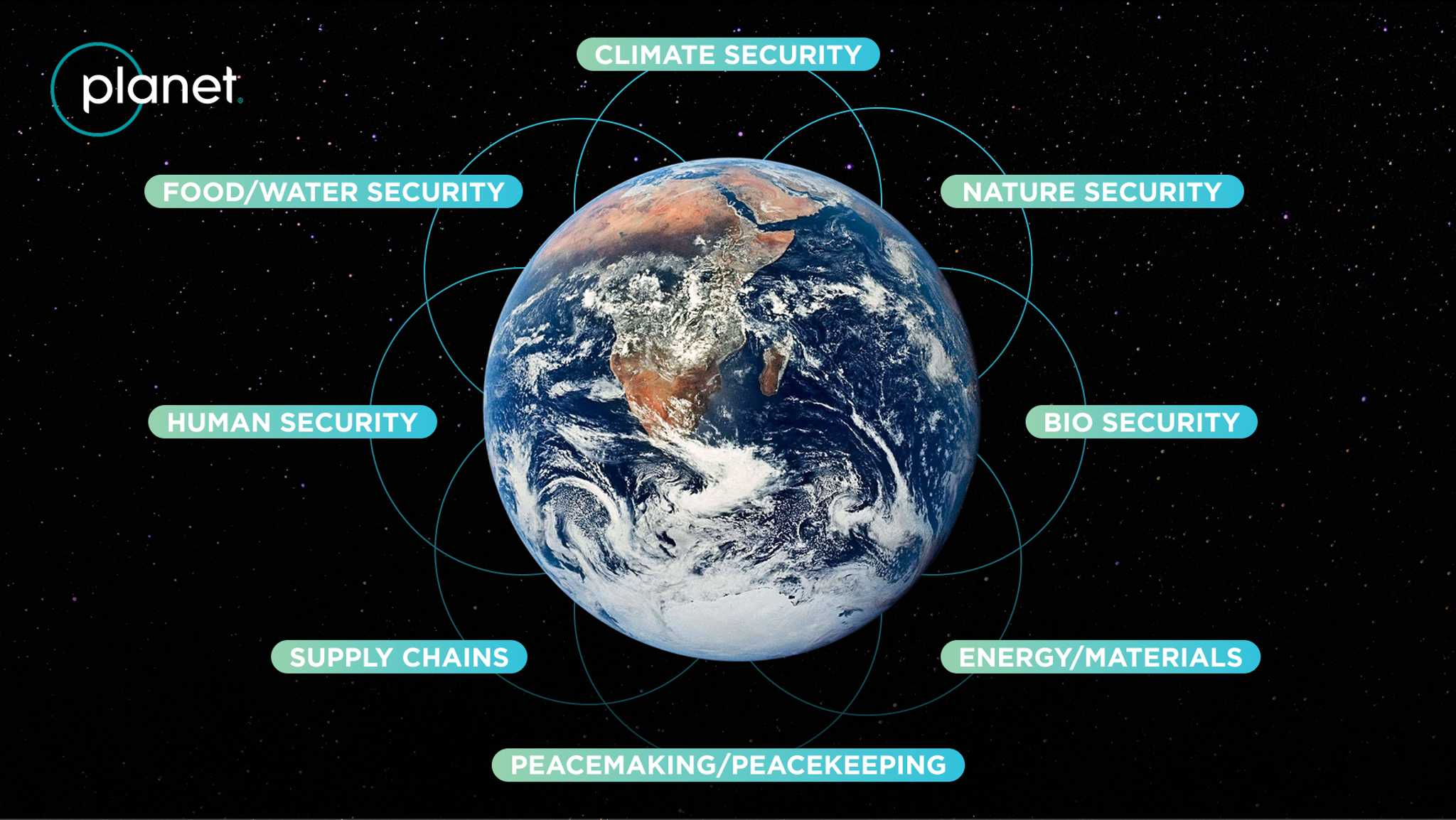
The program focuses on eight intersecting thematic areas: Climate Security, Nature Security, Human Security, Food and Water Security, Biosecurity, Energy and Materials Security, Critical Supply Chains, and Peacemaking and Peacebuilding. Each of these domains present risks that act as threat multipliers to traditional security concerns, blurring the lines between international security and the resilience of global institutions and systems.
.
Emerging tools, particularly the combination of daily, high-resolution Earth observation and artificial intelligence, can help illuminate the sometimes subtle interconnections between these domains, enabling more effective early warning and response.
The initiative is designed to foster new, collaborative projects that harness Planet’s capabilities as a critical driver of planetary intelligence across governments, civil society, academia, and multilateral organizations. It will initially make multi-year grants of Planet’s data, products, and services available, free of charge, to up to eight selected teams per year of qualified security actors, NGOs, policymakers, and multilateral institutions who are working to develop new solutions to protect both people and the planetary systems that sustain them.
“As the global landscape continues to rapidly shift, in order to achieve true security we must move from reaction to prevention. By democratizing access to high-cadence Earth observation data and imagery, Planet is empowering global actors to mitigate tomorrow's conflicts, today,” said Robert Cardillo, Chief Strategist and Chairman of the Board for Planet Federal, and former-Director of the National Geospatial Intelligence Agency (NGA).
“In today’s uncertain world, security now goes far beyond the traditional definitions of defence. Planet understands that its unique access to Earth data, combined with the power of artificial intelligence, can help secure economies, nature, technologies and societies. This programme will equip global partners to deliver this wider, modern approach to security,” said Sir Jeremy Fleming, Inaugural Member, Planet Defense and Intelligence Advisory Board.
The Initial Cohort in the Planetary Security Program
Four partners have already been selected for the initial Planetary Security program cohort, with more to follow. Each works with one or more of the key thematic pillars of the program.
- The Open Source Centre (OSC) is a UK-based non-profit that uses open-source intelligence (OSINT) to produce cutting-edge research products on some of the world's most pressing security challenges. As an inaugural member of the Planetary Security program, OSC will build on its long-term usage of Planet data to illuminate growing international competition in the changing Arctic.
“As the Arctic climate alters, its strategic geography and resources have made the High North a primary theatre for national power projection. By leveraging Planet’s unique data, imagery, and analytics, the Open Source Centre is honored to help provide deeper insights into these urgent developments.” said James Byrne Co-founder and CEO. - RAAPID, or the Remote-sensing Agricultural Assessments for Policy Impact and Decision-making initiative, is a recently-announced public/private initiative that will leverage Planet satellite data with AI-enabled partner analytics to help address urgent food system disruptions. First developed by NASA Harvest (UMD), it is now incubated at Rockefeller Catalytic Capital (RFCC), with support from initial founding partners including Microsoft’s AI for Good Lab, Google.org, Planet, and University of Strasbourg. RAAPID will deliver decision-ready agricultural information to support policy, humanitarian, and market stability.
“With the frequency and intensity of global conflict, climate hazards, and other stressors rapidly increasing, building a robust monitoring mechanism for food shocks is as essential as ever. By combining Planet’s unique, global Earth observation capabilities with the technical and policy expertise from our wider coalition of partners, RAAPID aims to improve our collective response to food system shocks and food security risks,” said Dr. Inbal Becker-Reshef, Founder of RAAPID, Managing Director of Microsoft’s AI for Good Lab, and Founder & Co- Director of NASA Harvest. - The HALO Trust, the world's largest and oldest humanitarian organization dedicated to clearing landmines, unexploded ordnance, and other explosive remnants of war, is building on its successes using Planet data in Ukraine to help clear the long-term remnants of civil war in Syria, where an estimated one in three people live in a mine-affected area. This work helps support more secure lives and livelihoods for communities recovering from conflict.
“Syria is the deadliest country when it comes to accidents from landmines and other explosive debris. HALO is engaged in a country-wide effort to understand and address the scope of contamination, and Planet’s capabilities will play an important role in our operations,” said Adam Jasinski, the COO of The HALO Trust. - The United Nations Development Programme (UNDP) Crisis Bureau is partnering with Planet to harness satellite data and advanced analytics to strengthen crisis preparedness, response, and early recovery in fragile and at-risk contexts.
“In areas exposed to conflict and natural hazards, timely and reliable data is critical to guide effective action. Through this partnership, UNDP is leveraging Planet data to identify emerging risks, assess crisis impacts, and support governments to accelerate the restoration of livelihoods and essential services. This ultimately helps reduce vulnerabilities and strengthen resilience for crisis-affected communities,” said Shoko Noda, UNDP Crisis Bureau Director.
Selected projects like the above will be provided with three years of comprehensive access to Planet data, products, and services. Special consideration will be given to initiatives that focus on more than one dimension of Planetary Security, and that produce tools and assets that are of broad utility. Andrew Hassanali, who has previously led Planet’s work in crisis response across conflict and natural disaster contexts, will manage this exciting new program, and foster these launch projects and future partnerships for success and impact.
Security in the twenty-first century is about more than defending national interests, borders and ways of life; it is about defending the systems that make life possible. To learn more about the program, or to learn how to apply for a relevant data grant, please contact planetarysecurity@planet.com. As the program progresses, we look forward to sharing updates on the cohort, use cases of Planet imagery and data solutions, and more.
Forward-looking Statements
Certain statements contained in this blog are “forward-looking statements” about Planet within the meaning of the securities laws, including statements about Planet’s strategic partnerships and Planet’s future growth in new and existing markets. Such statements, which are not of historical fact, involve estimates, assumptions, judgments and uncertainties. There are a number of factors that could cause actual results or outcomes to differ materially from those addressed in the forward-looking statements. Such factors are detailed in Planet’s filings with the Securities and Exchange Commission. Planet does not undertake an obligation to update its forward-looking statements to reflect future events, except as required by applicable law.

Ready to Get Started
Connect with a member of our Sales team. We'll help you find the right products and pricing for your needs.