

Planet On The Road Berlin: Driving European Resilience and Security With Geospatial Technology

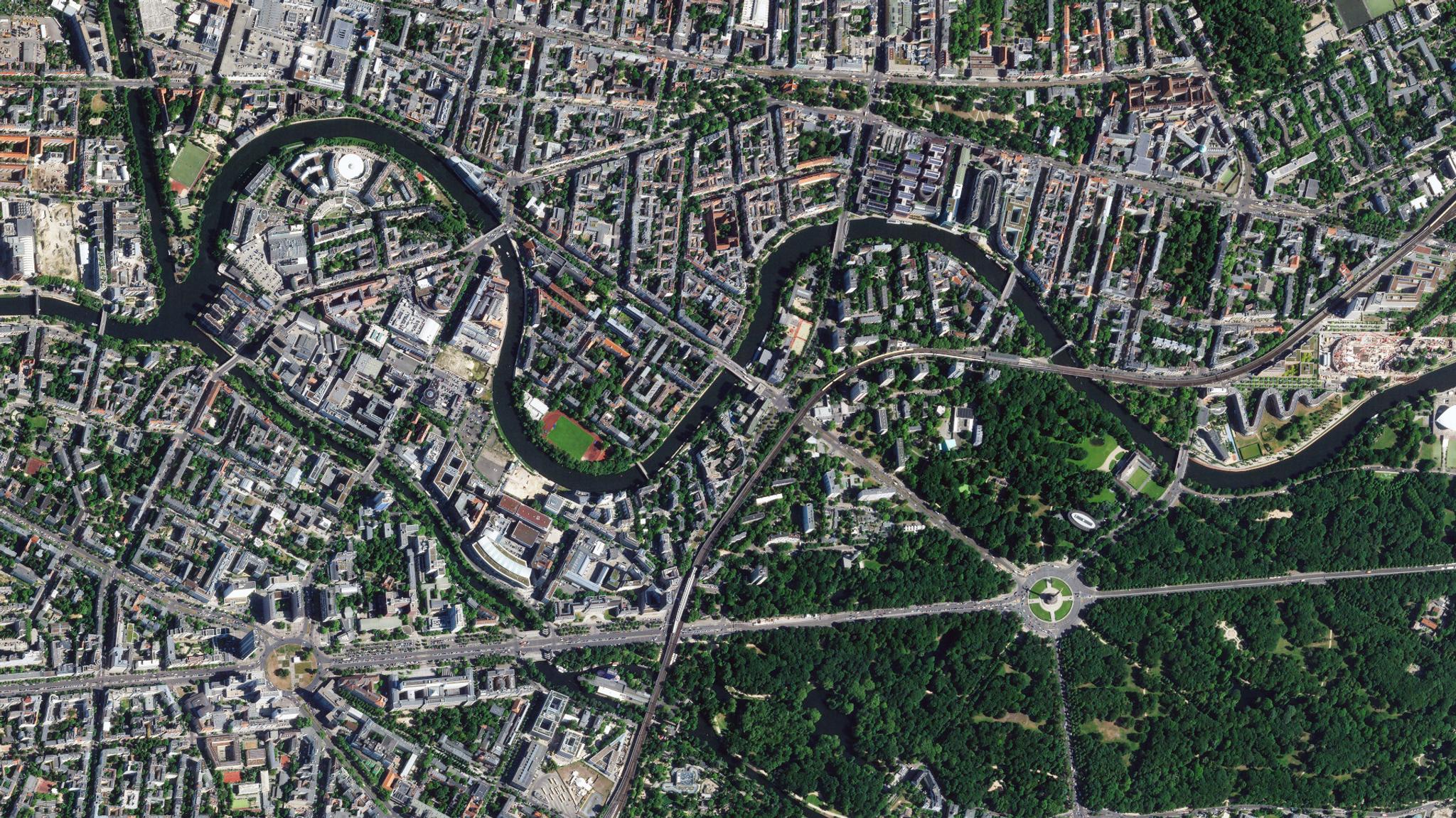
SkySat image of Berlin, site of Planet On The Road 2025, captured June 18, 2025. © 2023 Planet Labs PBC. All Rights Reserved.
StoriesLast week, the Planet On The Road event series arrived in Berlin, gathering government leaders, industry experts, and innovators across Europe, the Middle East, and Africa. Read on to learn about the valuable insights shared and discussed at the event.
Inspiring Keynotes From Planet Executives
Planet’s roots in Germany run deep, and Berlin today serves as the company’s European headquarters and Mission Control center. The event, hosted in the heart of Europe’s modern space industry, showcased how Earth observation (EO) is transforming Europe’s ability to address their unique challenges and opportunities, highlighting how satellite imagery and advanced analytics offer crucial insights for a more sustainable and secure future.
Planet President and CFO Ashley Johnson and CEO Will Marshall kicked off the day. Ashley discussed Planet’s partnerships and customers in Europe, as evidence of Europe’s rising need for EO insights to tackle challenges ranging from environmental to geopolitical.
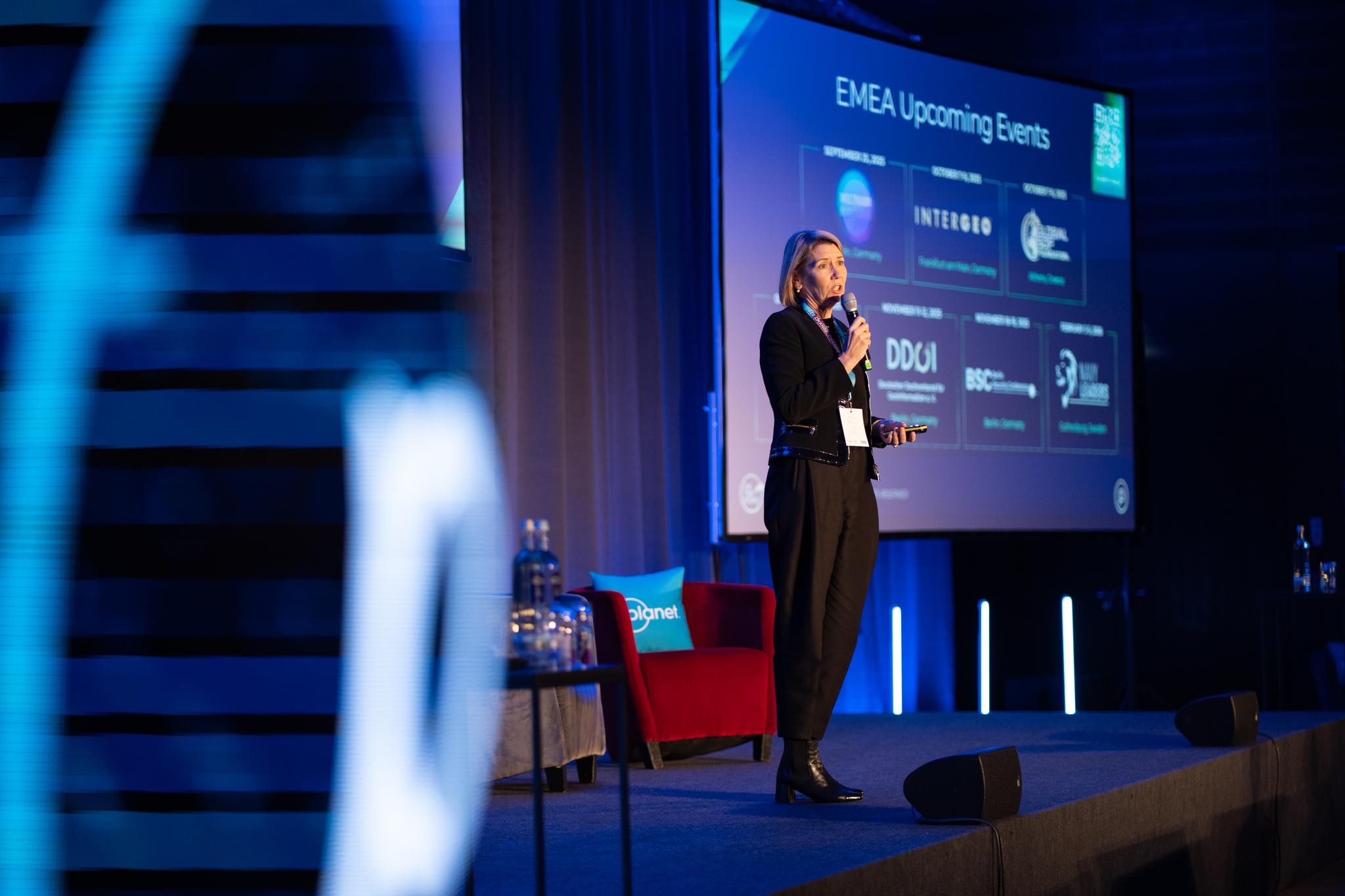
Ashley Johnson, Planet President and CFO, delivering her opening keynote.
Meanwhile, Will shared that when Planet first launched its mission, he understood that Earth was changing very quickly — quicker than satellites could keep up with at the time. “But to make informed decisions in a constantly changing world, you need real-world data, and that’s where Planet comes in,” Will said. Today, we operate the world’s largest commercial Earth-imaging constellation of hundreds of satellites. While Planet has succeeded in making the Earth’s changes visible, the company is dedicated to making it even more accessible and actionable. With continued product innovations, strategic partnerships, and exciting breakthroughs in AI technologies, Planet is in a better place than ever to make it happen.
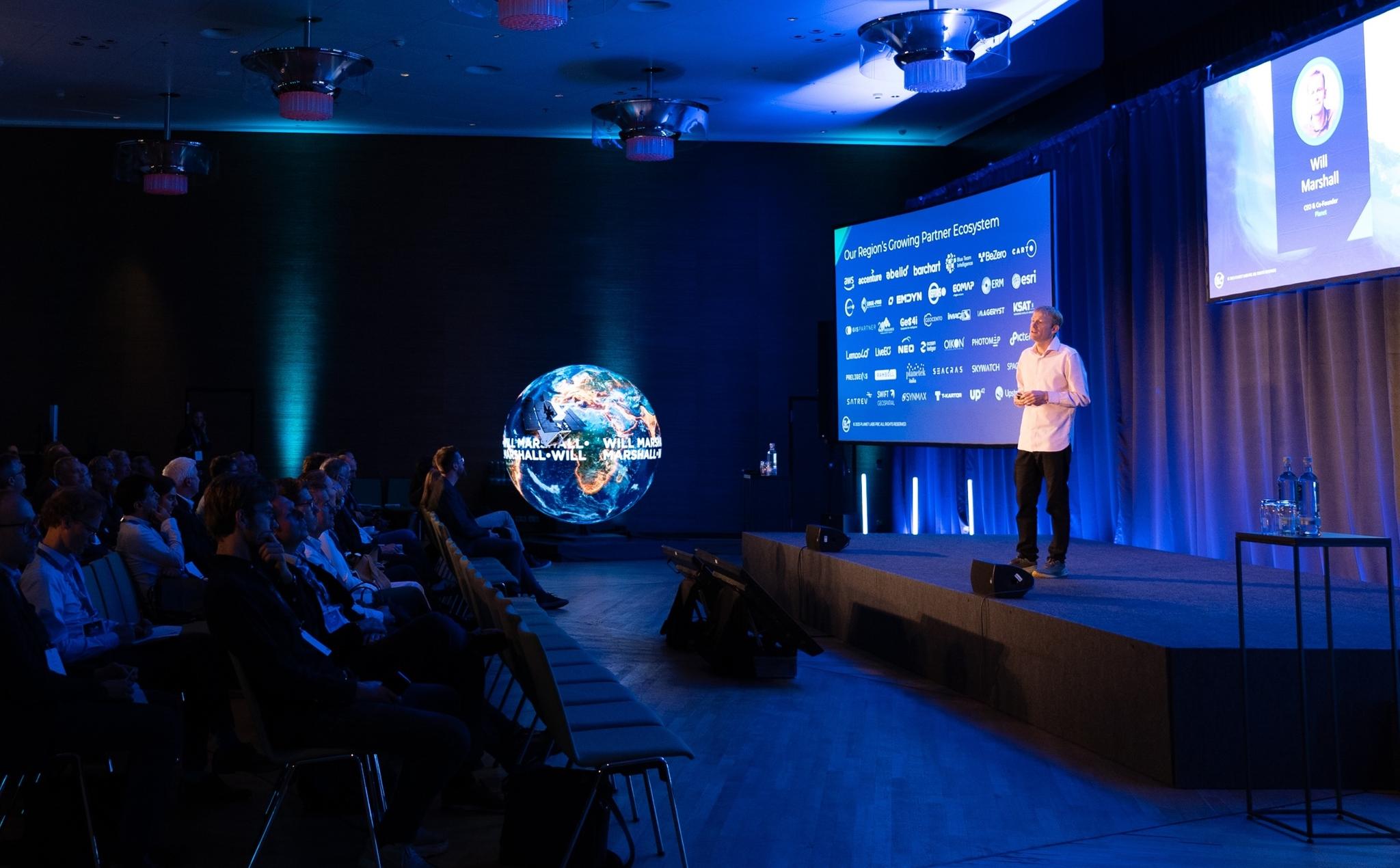
Will Marshall, Planet Co-Founder and CEO, delivering his keynote speech.
Top takeaways from the day include:
1. Earth observation (EO) data is becoming more accessible to everyone, empowering people in various European industries to take meaningful action.
Kiruthika Devaraj, Vice President of Avionics and Spacecraft Technology at Planet, highlighted the company’s philosophy of agile aerospace, which emphasizes enhancement through continuous iteration and rapid innovation, ensuring that Planet satellite constellations are always evolving and incorporating the latest advancements. This approach is what allows Planet to collect more data at a lower cost, and make this data accessible to those who need it: scientists, governments, businesses, non-profits, humanitarian causes, journalists, and more.
Thijs Van Leeuwen, Vice President of Product at Planet, talked to Angelika Gremska and Stefan Józefowicz, Staff Data Steward and Staff Data Engineer at Bayer’s Crop Science division focusing on agricultural innovation. They discussed how they leverage Planet data to make informed decisions that enhance crop yield, optimize resource use, and minimize environmental impact.
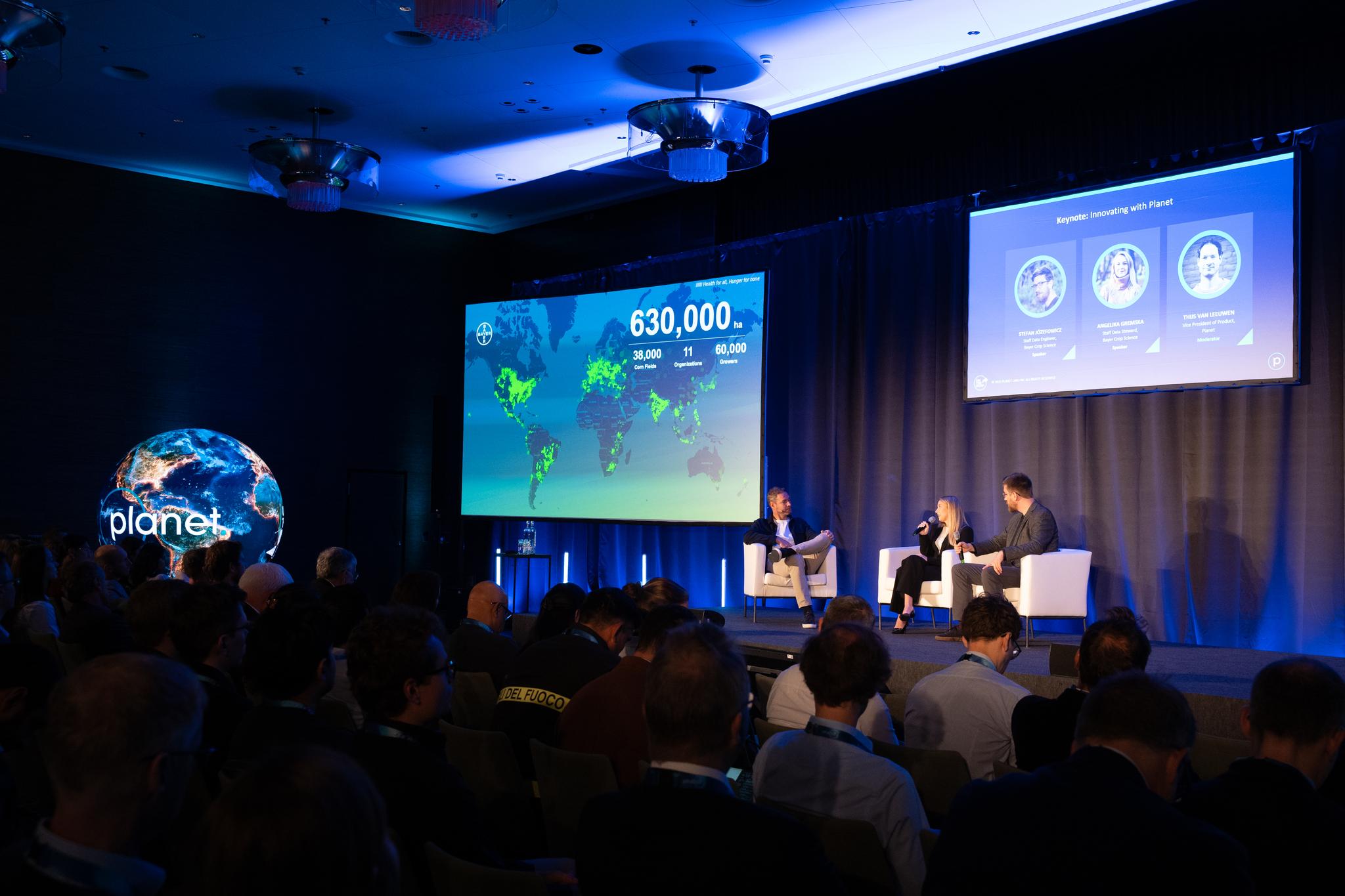
Keynote: Innovating with Planet (Thijs Van Leeuwen, Vice President of Product, Planet; Angelika Gremska, Staff Data Steward, Bayer Crop Science; Stefan Józefowicz, Staff Data Engineer, Bayer Crop Science)
Similarly, a panel moderated by Annet Eeltink, Senior Channel Sales Executive at Planet, covered how we recognise that imagery alone isn't enough, and we need to create solutions to help people realise the insights / benefits from EO. Planet partners are key to this and are delivering solutions that protect forests, secure water and sustain critical infrastructure. Michael Breetzke from Swift Geospatial discussed how they use Planet data to help clients monitor vast areas in industries like forestry and mining, where environmental responsibility and operational efficiency are critical. Dr. Thomas Heege from EOMAP shared how satellite data can monitor water quality, sediment, and aquatic ecosystems worldwide, and how his team’s insights are used by governments, engineers, and environmental agencies to manage our most vital resource – water. Finally, John Atkinson discussed how LiveEO helps protect critical infrastructure (such as pipelines, rail, and power lines) against third-party risks.
But agriculture is not the only space where satellite imagery is changing the game. From severe wildfires in Spain and Portugal, to intense floods in Germany and the Netherlands, natural disasters are becoming more frequent, more severe, and more costly. Diego Vanelli, Senior Manager of Government Sales at Planet, spoke to partners from the Italian National Fire and Rescue Service about how they’re responding to increasingly larger-scale disasters, Greece’s Ministry of Digital Governance about national strategies for digital transformation, and Latitudo 40 about the power of insights for disaster response mitigation and prevention.
Cooperation between these three key groups – first responders, technological innovators, and government decision-makers – is essential for their ability to mitigate and prevent the root causes of disaster events and better respond when they occur.
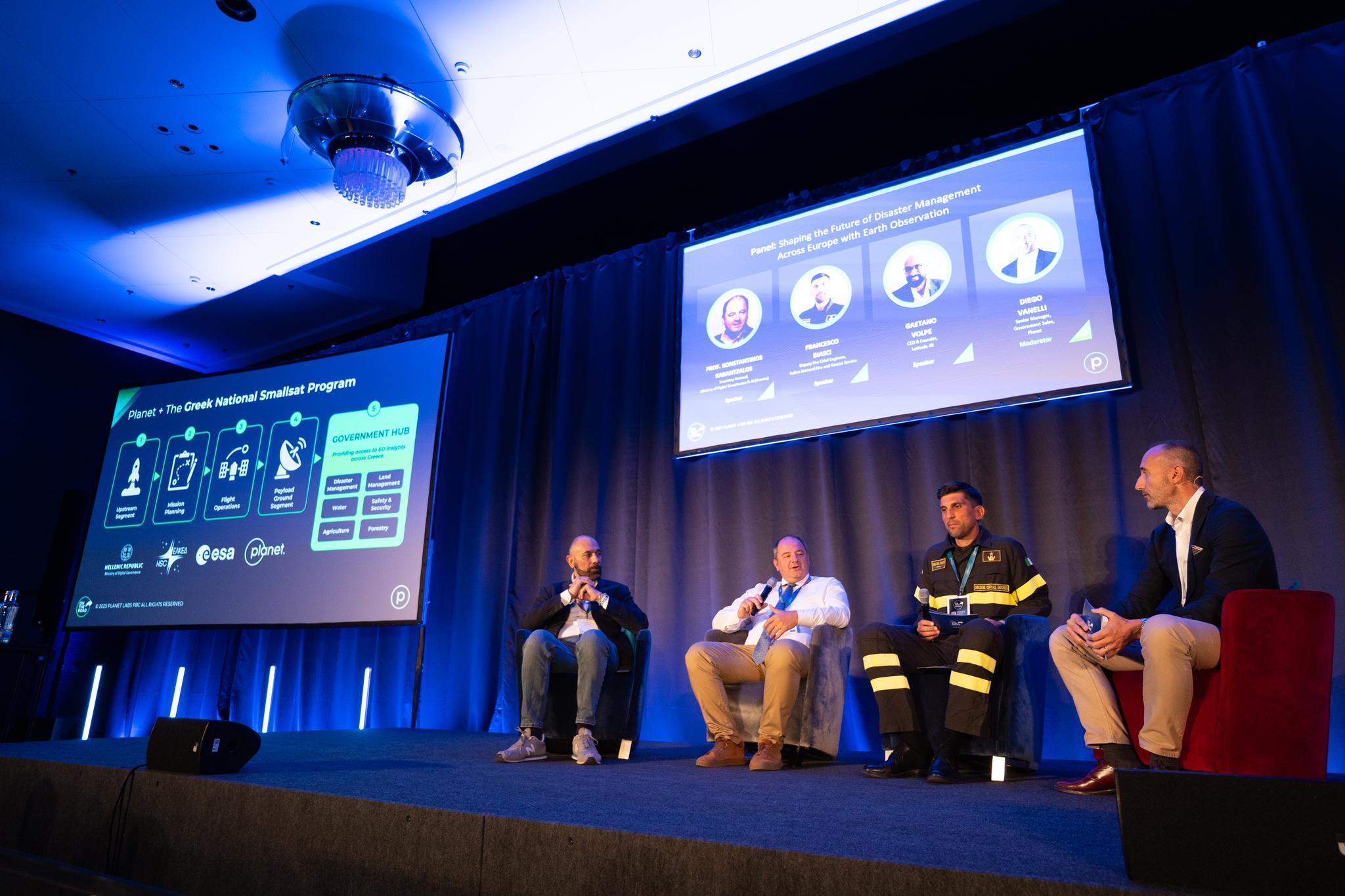
Panel: Shaping the Future of Disaster Management Across Europe with Earth Observation, with Diego Vanelli, Senior Manager, Planet (moderator); Francesco Biasci, Deputy Fire Chief Engineer, Italian National Fire and Rescue Service; Prof. Konstantinos Karantzalos, Secretary General of Telecommunications and Posts, Ministry of Digital Governance (Greece); Gaetano Volpe, CEO & Founder, Latitudo 40.
Later in the day, Galen Reich from Bellingcat, a Netherlands-based investigative journalism network, talked about how accessible satellite imagery is empowering investigative journalism to uncover hidden truths and hold those in power to account — from illicit shipment tracking to damage to civilian infrastructure. This means satellite imagery is no longer just for governments; it is now a public-interest tool that supports transparency, accountability, and open investigation globally, ultimately fostering an informed public.
The variety of all of these applications makes one thing clear: everyone can utilize satellite data to help life on Earth. As Annet said, “When we combine innovation with strong partnerships, we can move faster and make a bigger impact – from protecting forests to securing water and sustaining critical infrastructure.”
2. Europe’s security needs are rising, and accelerating the adoption of geospatial technology can help ensure European resiliency.
To address this urgent challenge, Martin Polak, Managing Director of Planet Labs Germany, invited Matthias Wachter of the Federation of German Industries (BDI) to discuss the increase of commercial “New Space” technology adoption within the EU, and particularly in Germany in the last few years. Specifically, they covered Europe’s growing defense needs; the new focus on space and geospatial technology; the primary roadblocks that hinder the adoption of this technology; and, importantly, the critical policy changes Germany and Europe need to make to accelerate government uptake of digital and geospatial technologies.
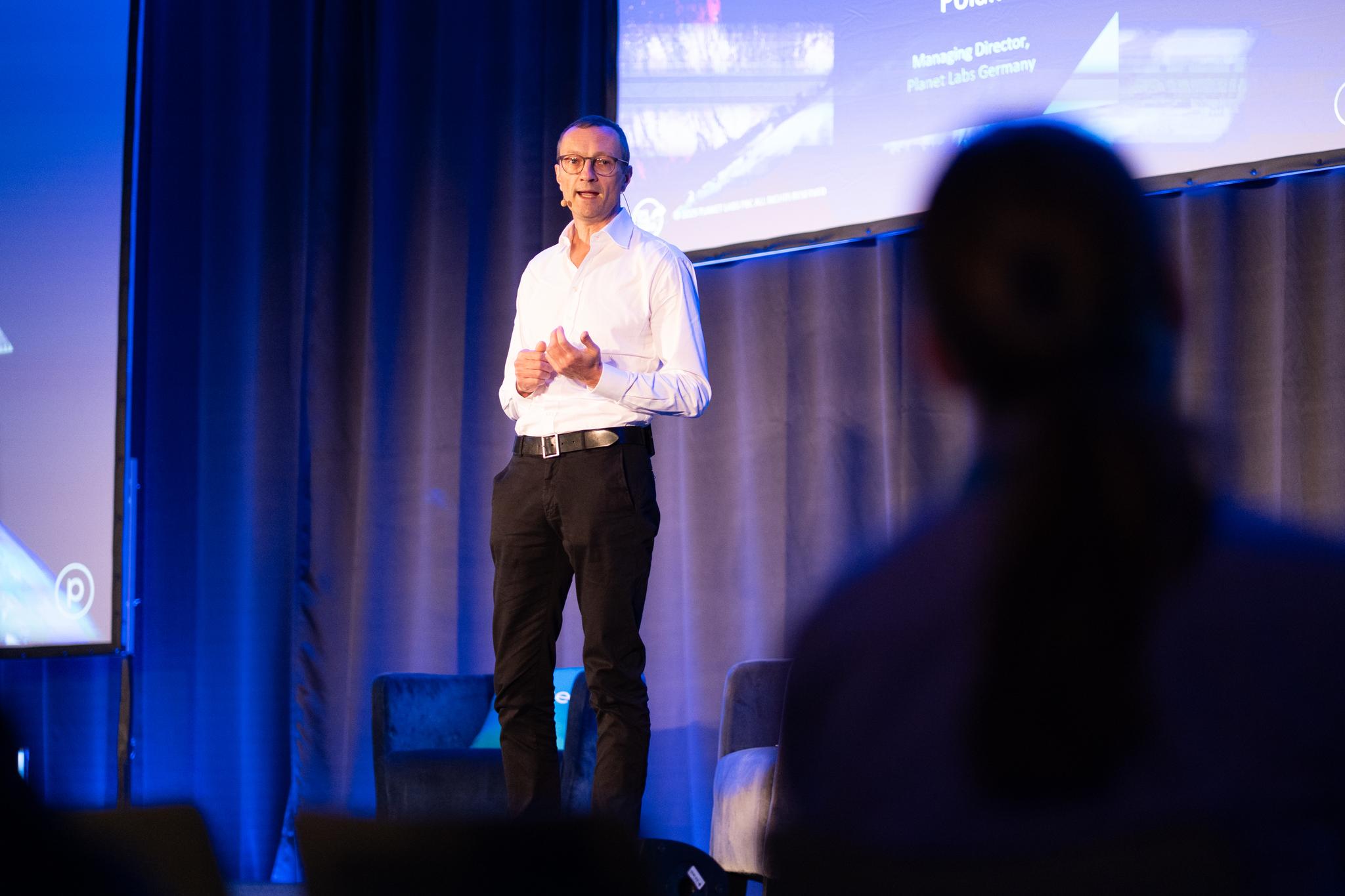
Fireside Chat: How New Space is driving innovation and security in Europe; Martin Polak, Managing Director, Planet Labs Germany GmbH.
The fireside chat was followed by a panel discussion about the EU Space Act and navigating Europe’s space agenda, moderated by Torsten Kriening of SpaceWatch.GLOBAL. The discussion centered on whether the 150-page Space Act, intended to be a strategic political signal for a unified European space market, would ultimately be a business enabler or a bureaucratic hurdle. Niklas Nienass (European Space Vision, Former MEP) supported the Act for setting international standards and ensuring sustainability. Magnus von Cramm (BDLI) worried that over-regulation will hinder Europe’s competitiveness in space. Peter Stubbe (DLR) supported a leaner act to foster business but recognized the need for regulation to preserve the usability of outer space.
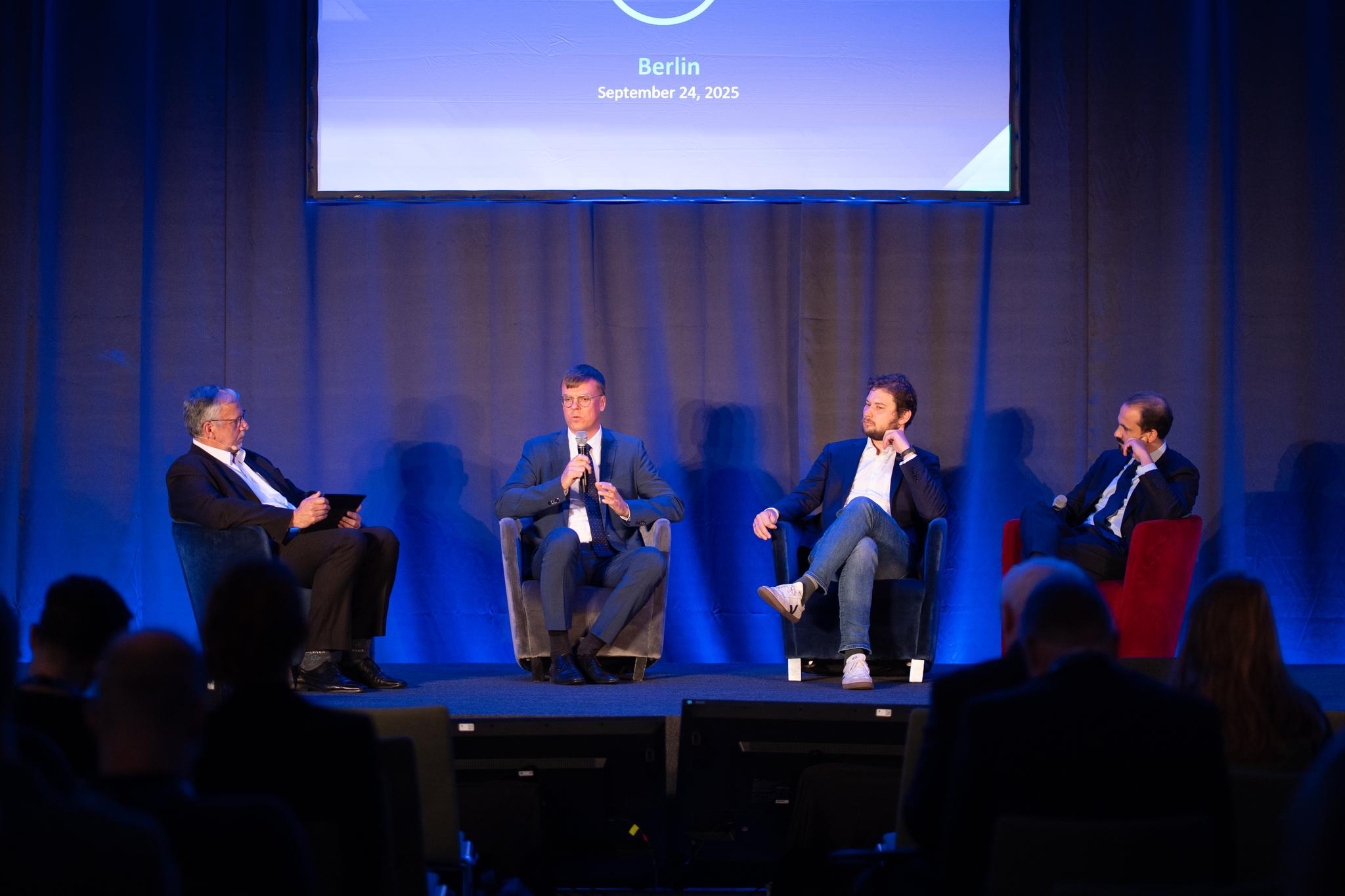
Panel: EU SPACE ACT - Navigating Europe's Space Agenda; Torsten Kriening, CEO, SpaceWatch.Global (moderator); Magnus von Cramm, Head of Space, BDLI; Niklas Nienass, Founder and CEO of European Space Vision, Former Member of the European Parliament; Dr. Peter Stubbe, Head of European Affairs Department, German Aerospace Center, Space Agency - DLR.
As environmental change accelerates, the financial sector is being forced to confront both the immediate and long-term risks of natural disasters. Planet’s Insurance and Finance Lead Berend de Jong hosted the panel exploring how banks and insurers are turning to satellite data to better understand, manage, and reduce these risks. McKenzie Intelligence Founder and CEO Forbes McKenzie shared how they provide rapid, post-disaster insights that enable insurers and governments to assess damage, validate claims, and accelerate recovery. Mila Luleva from Rabobank talked about how the global agricultural bank uses Earth observation to support sustainable finance. This session shed light on how satellite data enables finance to move from reactive recovery to proactive resilience.
Accelerating the use of space is essential for building resilience against environmental, geopolitical, and financial threats in Europe.
3. Artificial intelligence is revolutionizing the speed and scale at which users can harness insights from EO data.
AI is revolutionizing the way we understand, monitor, and predict change. As Will mentioned in his keynote, we are in the midst of an AI revolution. While AI is advancing rapidly, it's only as effective as the quality of the data it’s trained on. This is where the geospatial community has an advantage. By combining AI with EO data, organizations can accelerate time to value, scale faster, and increase adoption.
Planet’s partners are already blazing the trail of this revolution. During the event three partners showcased how they are harnessing the power of Planet data and AI to deliver insights and drive critical decision-making.
Blue Team Intelligence, for instance, demonstrated how they are analyzing soil – an important variable that can determine the success or failure of military operations. “Soil matters,” said Bas Ooink, Blue Team’s Managing Director, but it’s hard to analyze due to a lack of accurate data. However, using Planet data, Blue Team Intelligence developed a Daily Global Soil Trafficability solution that is globally available at 100 m resolution in near-real time. The solution is “dual-use,” it’s useful for military applications and for emergency response, agriculture, infrastructure, forestry, and earth sciences.
Similarly, SynMax Co-Founder and Chief Technology Officer Eric Anderson talked about their agentic AI-powered maritime intelligence platform, Theia. Eric noted that the volume of data captured from our oceans makes it impossible for human analysts to track and analyze all vessel movements alone. To solve this challenge, SynMax developed Theia, which can automatically detect, classify, and attribute vessels based on satellite imagery. What would require an impractical number of human hours can be completed in just three minutes with Theia, reflecting enormous potential for solutions that combine reliable data with innovations in AI.
The last AI spotlight was by Oliver Buck, Head of Technology Management at EFTAS, who spoke about the company’s use of AI and its partnership with Planet to enhance monitoring services. A major focus of their work is securing high-quality reference data for training AI models. EFTAS has used advanced machine learning to perform automatic quality checking of LUCAS point photos taken in different directions that has resulted in ∼24,500 high-quality reference points essential for training robust AI models.
Leveraging these insights, EFTAS applies Planet data for specialized services. For agricultural monitoring in Germany, for instance, EFTAS uses Planet data to detect crop development and to analyze challenging field parcels. The company also uses PlanetScope data in combination with LIDAR and orthophotos to create and update urban digital twins for tasks like mapping tree species in cities.
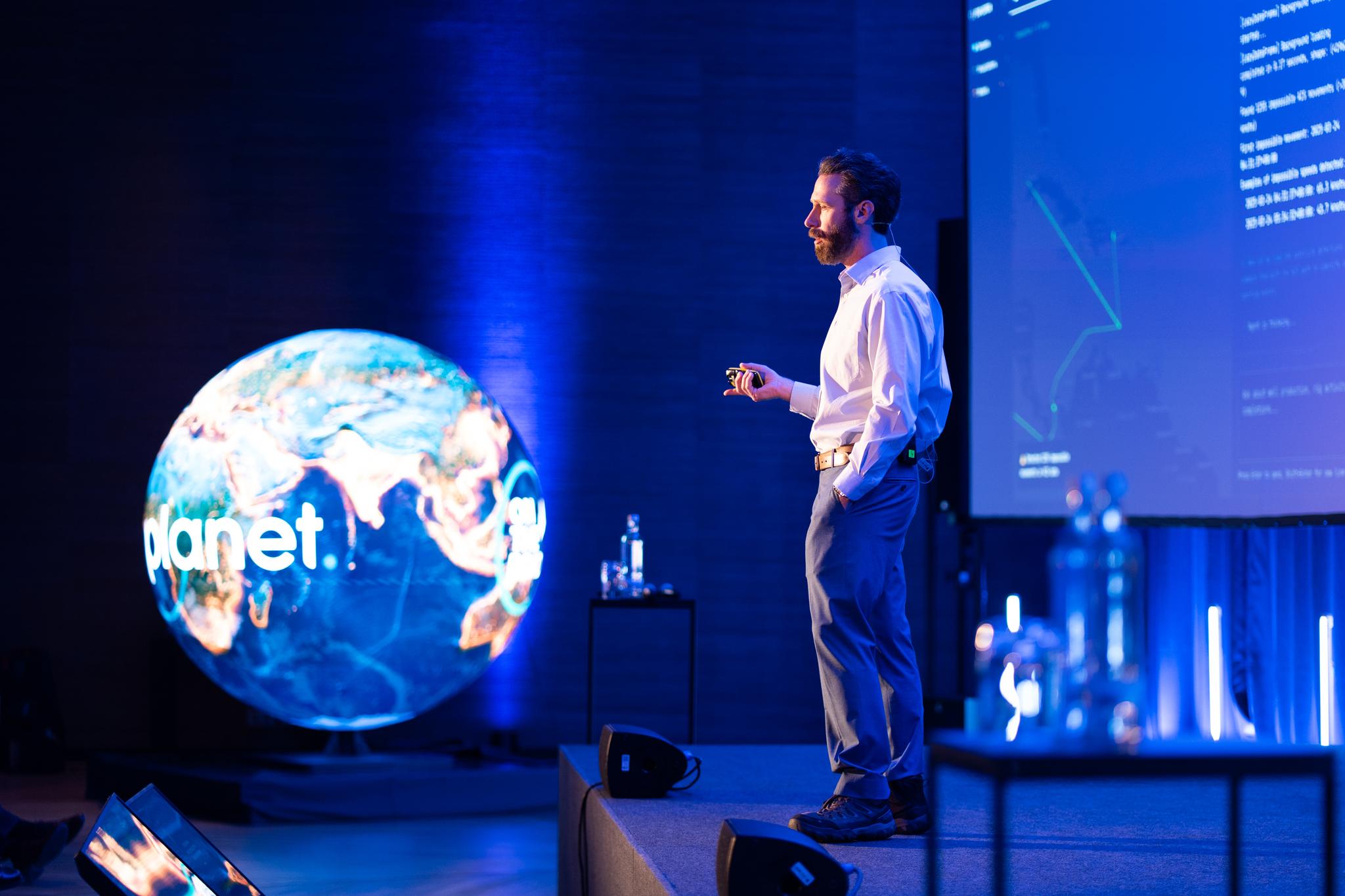
AI Spotlight: SynMax; Eric Anderson, Co-Founder & Chief Technology Officer, SynMax.
Planet Purpose Award Highlights Real-World Impact With Earth Observation Data
On The Road Berlin wrapped up with the announcement of the first-ever recipients of the Planet Purpose Business Impact Awards in Berlin. This award celebrates partners and customers who are leveraging Planet data to transform their business and the world around them.
The recipient for the Civil Government Impact Award was the Welsh Government. For years, the Welsh Government has been at the forefront, using Planet's data to support regulators like Natural Resources Wales, combat waste crime, monitor illegal activities, and build a powerful evidence base they've never had before. Their work is a brilliant example of how satellite data can support policy and create a more sustainable future.
Our recipient for the Commercial Business Impact Award is Bluebell. Their Pixel of Hope service demonstrates a powerful and innovative application of satellite data, using PlanetScope® and SkySat® imagery to provide crucial reassurance and visibility to individuals in conflict zones. It’s a remarkable example of how geospatial technology can create both tangible business growth and significant humanitarian impact.
Planet On The Road Berlin was made possible by our sponsors — SWIFT, EOMap, EFTAS, and Latitudo40, Blue Team Intelligence, LiveEO.
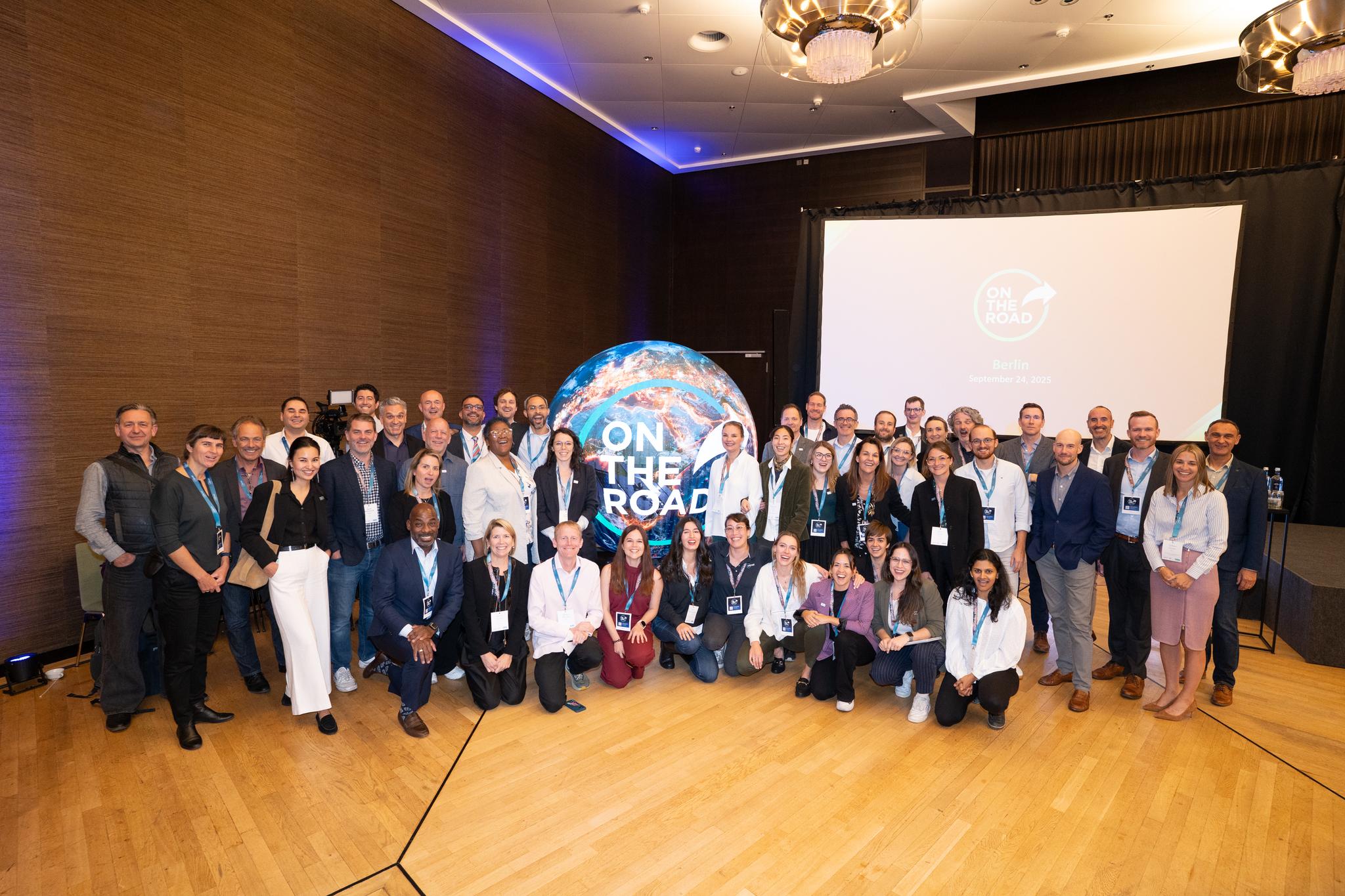
Planeteers gathered after the event.
Next Stop: Washington D.C.
The next stop for Planet On The Road is on November 13, 2025 in the Washington D.C. area. Learn more about the event and register at the event webpage.
Did you miss our event in Bali? Read more about how EO technology addresses the unique challenges and opportunities across the Asia-Pacific region.
Forward-Looking Statements
Certain statements contained in this blog are “forward-looking statements” about Planet within the meaning of the securities laws, including statements about the Company’s ability to capture market opportunity and realize any of the potential benefits from current or future products, product enhancements, new products, or strategic partnerships and customer collaborations. Such statements, which are not of historical fact, involve estimates, assumptions, judgments and uncertainties. There are a number of factors that could cause actual results or outcomes to differ materially from those addressed in the forward-looking statements. Such factors are detailed in Planet’s filings with the Securities and Exchange Commission. Planet does not undertake an obligation to update its forward-looking statements to reflect future events, except as required by applicable law.

Ready to Get Started
Connect with a member of our Sales team. We'll help you find the right products and pricing for your needs.