How Planetary Intelligence Is Opening New Geospatial Frontiers

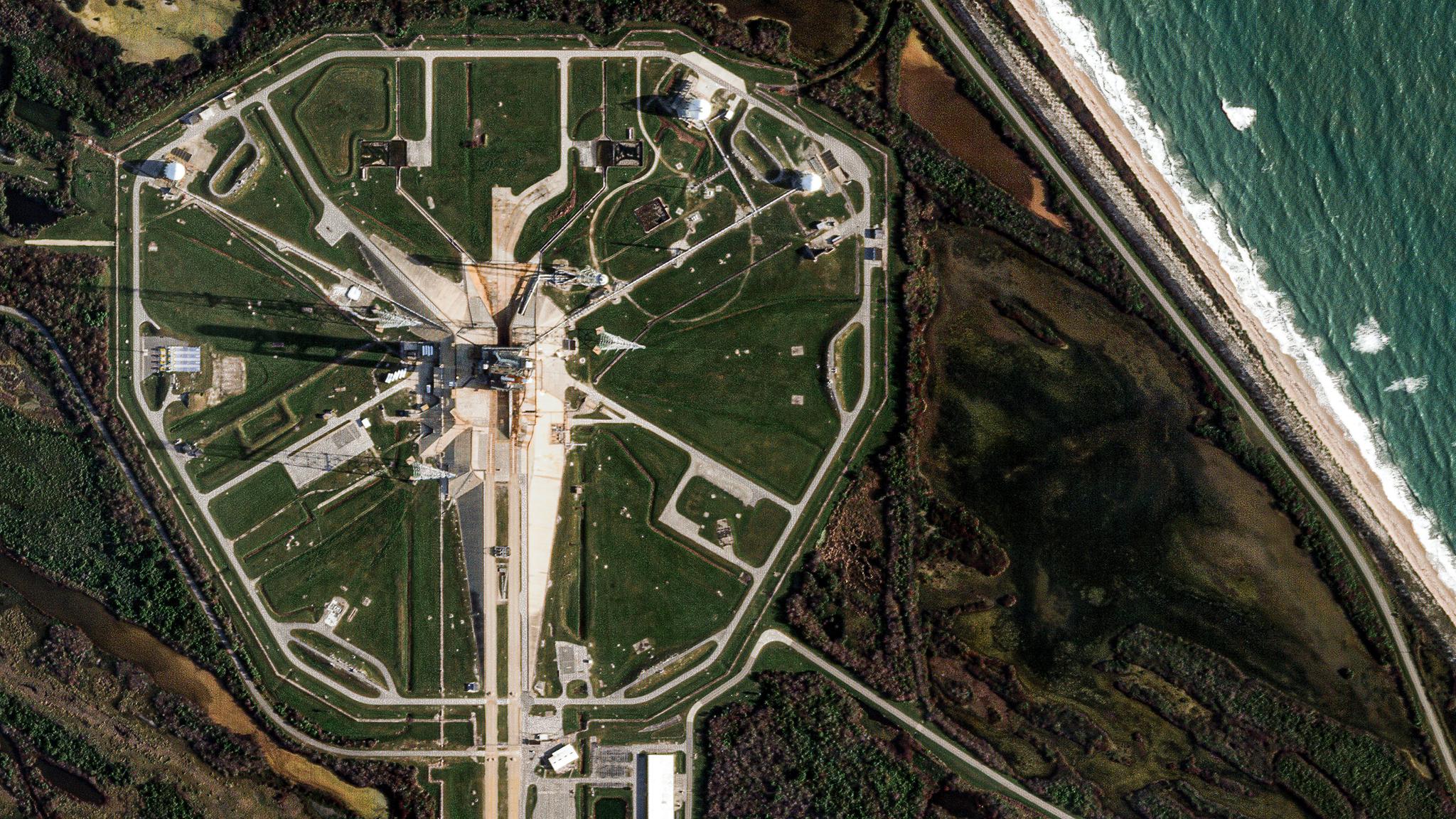
SkySat® image of NASA’s Space Launch System rocket and Orion spacecraft at Kennedy Space Center, captured on April 1, 2026. © 2026, Planet Labs PBC. All Rights reserved.
StoriesHistorically, to identify and track change in a remote area like the Brazilian Amazon, an analyst studying deforestation would face a long and arduous process. They would need to manually scan through massive quantities of satellite data to compare pixel-level changes, and then use their expertise and advanced degree to apply specialized processing techniques and software packages.
Imagine a world where natural language queries can yield actionable geospatial insights using a simple question like: Show me places in Brazil that change from tropical rainforest to clearcut land. See more in the demo, below.
Loading Video...
This demonstration of Planet’s agentic AI app, now in open beta, showcases how simple, natural language queries can yield actionable geospatial insights about deforestation in the Brazilian Amazon.
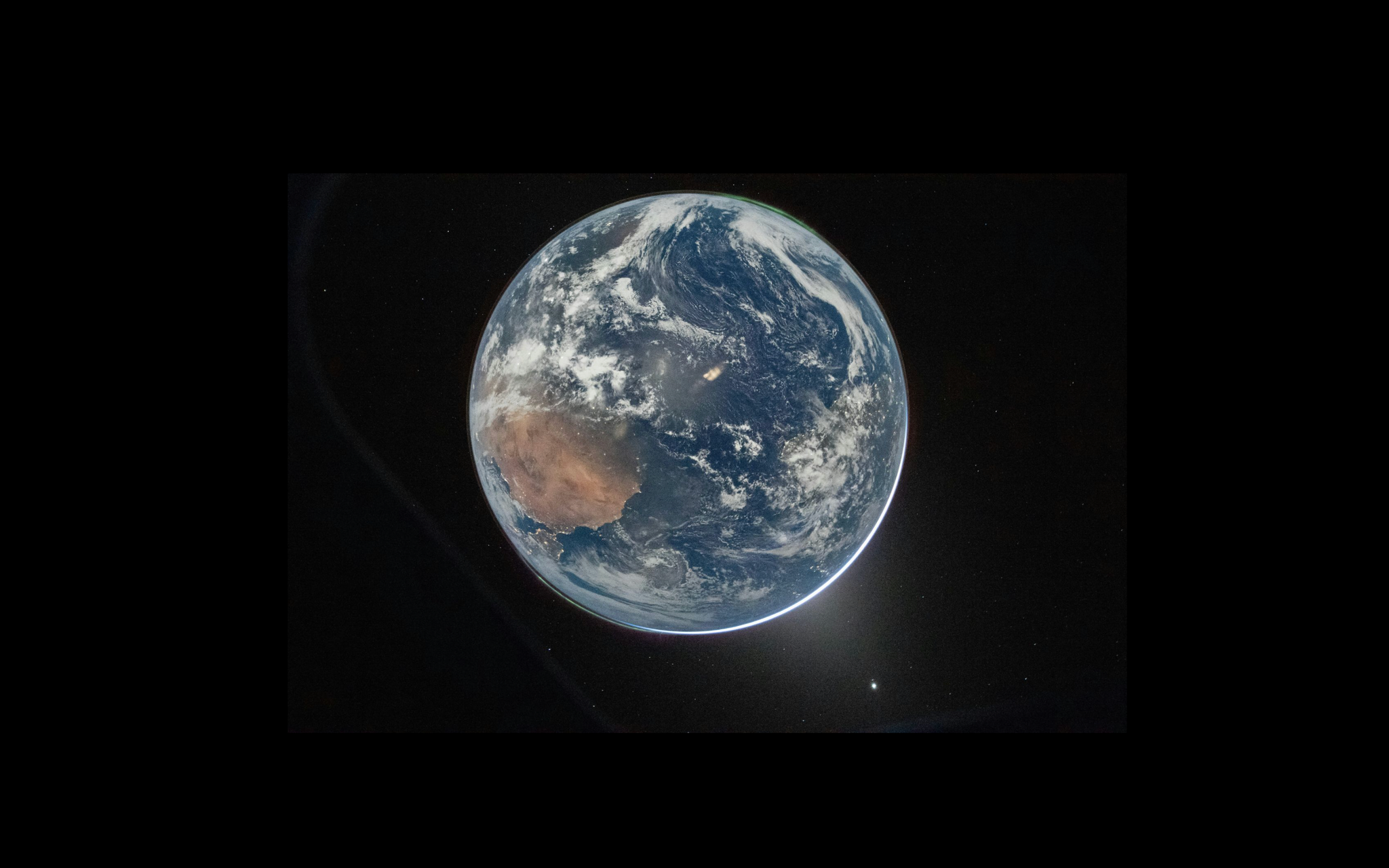
At Planet, we're still providing customers with the critical geospatial insights they need, but now with unprecedented speed, scale, and access that new artificial intelligence (AI) capabilities provide. By linking our decade-long archive of daily, global imagery with advanced AI, we’re building toward a system that observes and interprets change on Earth in near-real time.
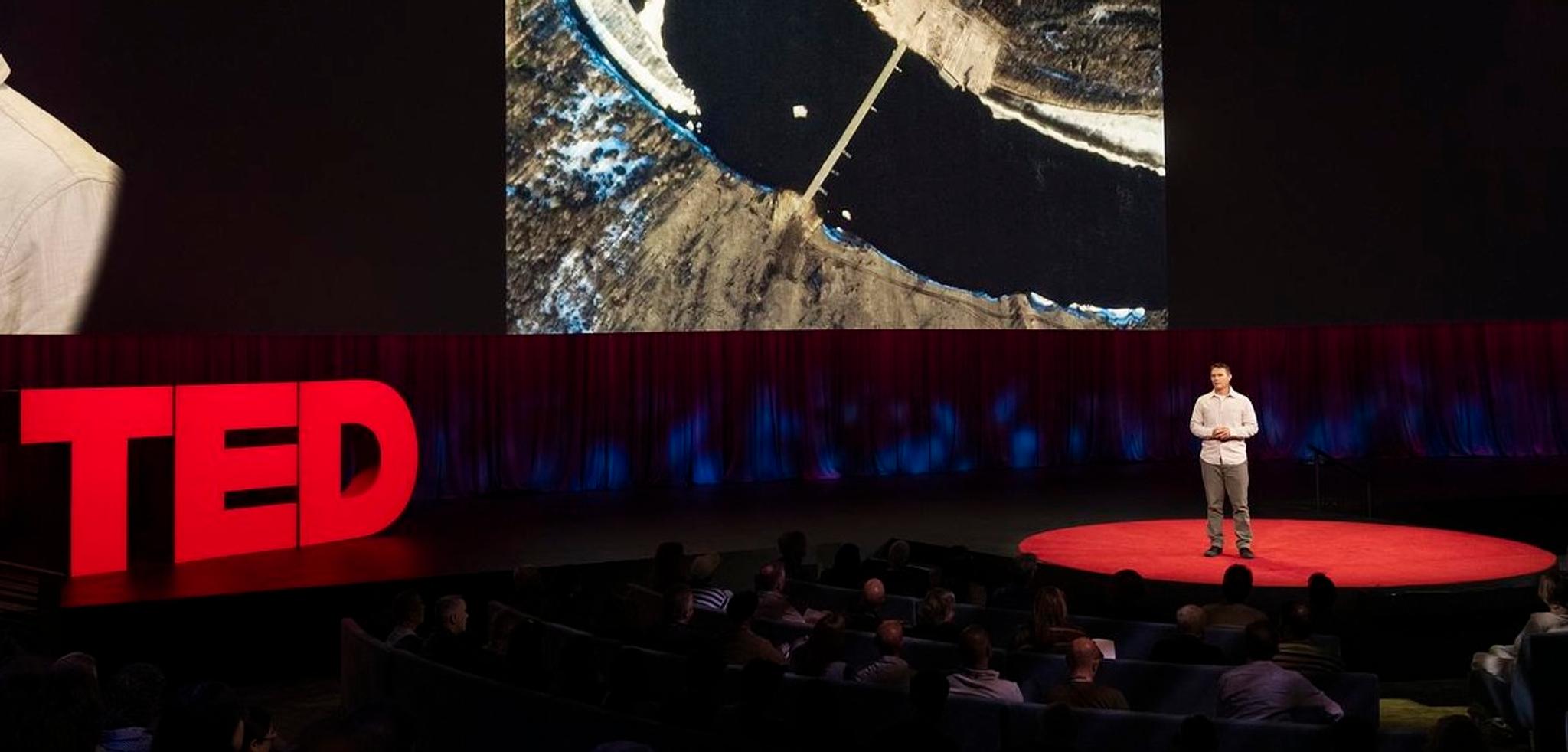
In the same way that Large Language Models (LLMs) have been trained on the text of the internet to understand human language, we envision a future where a new kind of AI model is trained on Earth observation data about the physical world. These new Large Earth Models (LEMs), trained on our unprecedented data archive and global daily scan, could understand the difference between normal variation and meaningful anomalies and help empower humanity to make better decisions in response to change. Planet Co-Founder and CEO Will Marshall shared his vision for what we’re calling Planetary Intelligence in a recent essay, in which he envisions “a real-time sensing and compute system to enable decision-making.”
In this article, we explore what Planetary Intelligence means in practical terms today, including specific recent innovations across Planet data and solutions, and how we’re building for the future.
AI Across the Planet Value Chain
Building Planetary Intelligence means creating a system that can help customers better understand change on Earth. To get there, we are layering AI across the full Planet platform: into the hardware of our satellites in space, into the way we process and enhance our data, and into the experiences that deliver outcomes to customers. These three areas of AI integration work together toward one goal: making Planet’s daily, global view of change easier to access, faster to interpret, and more valuable to act on.
- AI is also at the core of how we deliver outcomes to customers. Our AI-powered solutions help track maritime events, monitor compliance for agricultural subsidies, and detect daily changes at a global scale. And continued expansion of our AI capabilities is a key priority, as demonstrated by our 2025 acquisition of Bedrock Research, a geospatial AI solutions company which is helping us accelerate our global monitoring solutions capabilities.
- In space, we’re integrating edge compute capabilities directly into our satellites, with our first generation (Gen 1) Pelican satellites carrying NVIDIA Jetson platforms onboard. Recently, we used the Jetson chip onboard Pelican-4 to run automatic object detection in orbit just a few minutes after imagery capture, a breakthrough for Planet and a milestone in reducing time-to-value for customers.
Loading Video...
This video shows the first successful deployment and execution of AI-driven object detection directly onboard Planet spacecraft, using imagery captured by Pelican-4 on March 25, 2026 over Alice Springs, Australia.
- We’re also working to expand our deployment of AI hardware in orbit by partnering with Google on Project Suncatcher, a moonshot effort to test the performance of Tensor Processing Units in the harsh environment of space.
- On the software side, we’re combining AI with our deep stack of historical data to deliver more accessible, actionable information to customers. We recently announced Planet SuperRes, an advancement that uses AI to sharpen the visual resolution of our signature, near-daily PlanetScope® imagery from 3 to 2 meters, giving customers a visual solution tailored for human perception.
- We are also collaborating with NVIDIA to create a searchable vector map of the entire Earth, by turning the whole planet’s daily data stream into scalable AI embeddings.
As we build towards the vision of Planetary Intelligence by leveraging AI throughout our value chain, we're working to bring customers accessible geospatial insights at unprecedented speed and scale.
Experience Agentic Geospatial AI
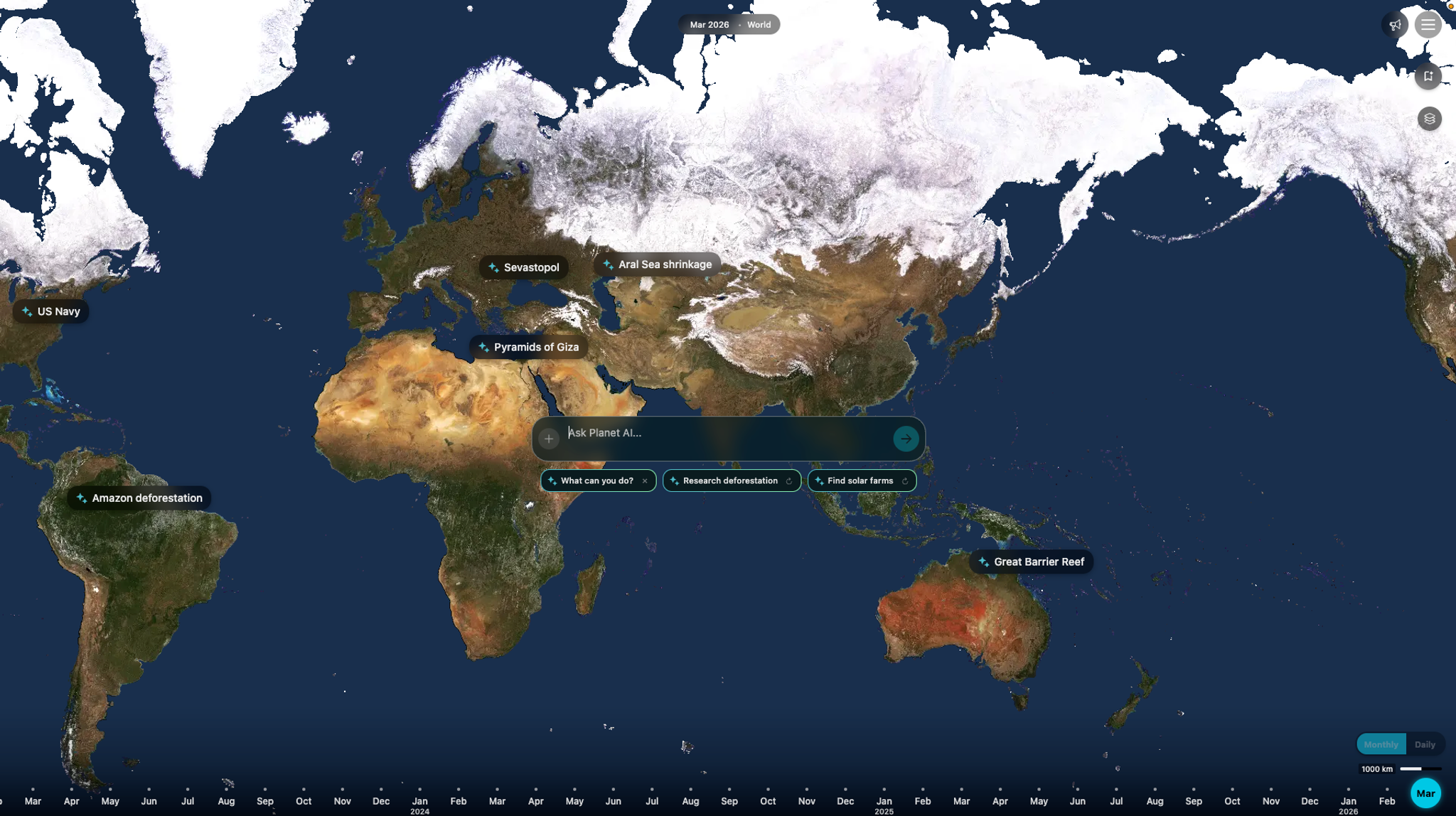
We’ve taken an exciting step towards Planetary Intelligence with the development of our new agentic AI application, now available as an open beta. This new AI capability aims to combine Planet data, change detection, and public information in an easy-to-use, map-based chat interface, providing timely geospatial insights. We’re excited to be introducing this new way of exploring and using Planet data.
Loading Video...
With a prompt to analyze the development of a data center in Tennessee, the agent provided before-and-after imagery of the data center’s construction, synthesized public web data for context, and surfaced tools for measuring the building’s footprint.
The applications for customers across government and commercial sectors are broad, from tracking land use compliance and monitoring assets and supply chains, to supporting proactive disaster preparedness and response. We are designing the Planet AI agent to allow users to search the PlanetScope archive, identify relevant locations, visualize change over time, with the goal of identifying locations, visualizing change, and generating reports. Workflows that once required manual GIS processing, research, and analysis can begin to move into a faster, more accessible experience.
We see this as especially powerful for organizations that rely on geospatial insights, but may not have deep technical GIS expertise in-house. As we integrate agentic geospatial AI, government agencies, commercial teams, NGOs, and researchers can explore complex questions more intuitively and turn Planet’s imagery into actionable insight with less friction.
Building the Future of Geospatial Insights
We’re at an exciting and critical inflection point for the future of Earth imaging and geospatial insights. As we move ever-closer to achieving Planetary Intelligence and prepare to launch our agentic geospatial AI app, we invite you to test our early capabilities and enroll in the open beta. Sign up to start exploring today.
Forward-Looking Statements
This blog contains forward-looking statements within the meaning of Section 27A of the Securities Act of 1933, as amended, and Section 21E of the Securities Exchange Act of 1934, as amended. Forward-looking statements generally relate to future events or Planet’s future financial or operating performance. In some cases, you can identify forward-looking statements because they contain words such as “expect,” “estimate,” “project,” “budget,” “forecast,” “target,” “anticipate,” “intend,” “develop,” “evolve,” “plan,” “seek,” “may,” “will,” “could,” “can,” “should,” “would,” “believes,” “predicts,” “potential,” “strategy,” “opportunity,” “aim,” “conviction,” “continue,” “positioned,” “structured” or the negative of these words or other similar terms or expressions that concern Planet’s expectations, strategy, priorities, plans or intentions.
Forward-looking statements in this blog include, but are not limited to, statements regarding Planet’s financial guidance and outlook, expected financial and operating results, the expected value of contracts that Planet has entered into and the timing and amount of revenue that Planet will recognize, Planet’s growth opportunities, Planet’s expectations regarding future product development and performance, including with respect to AI, Planet’s expectations regarding the launch and operations of its satellites, including with respect to timing, and Planet’s expectations regarding its strategies with respect to its markets and customers, including trends in customer demand. Planet’s expectations and beliefs regarding these matters may not materialize, and actual results in future periods are subject to risks and uncertainties that could cause actual results to differ materially from those projected, including risks related to the macroeconomic environment and risks regarding Planet’s ability to forecast Planet’s performance due to Planet’s limited operating history. The forward-looking statements contained in this blog are also subject to other risks and uncertainties, including those more fully described in Planet’s filings with the Securities and Exchange Commission (“SEC”), including Planet’s Annual Reports on Form 10-K, Quarterly Reports on Form 10-Q, and any subsequent filings with the SEC that Planet may make. All forward-looking statements reflect Planet’s beliefs and assumptions only as of the date of this blog. Planet undertakes no obligation to update forward-looking statements to reflect future events or circumstances, except as may be required by law.