The 2026 FIFA World Cup, From Above

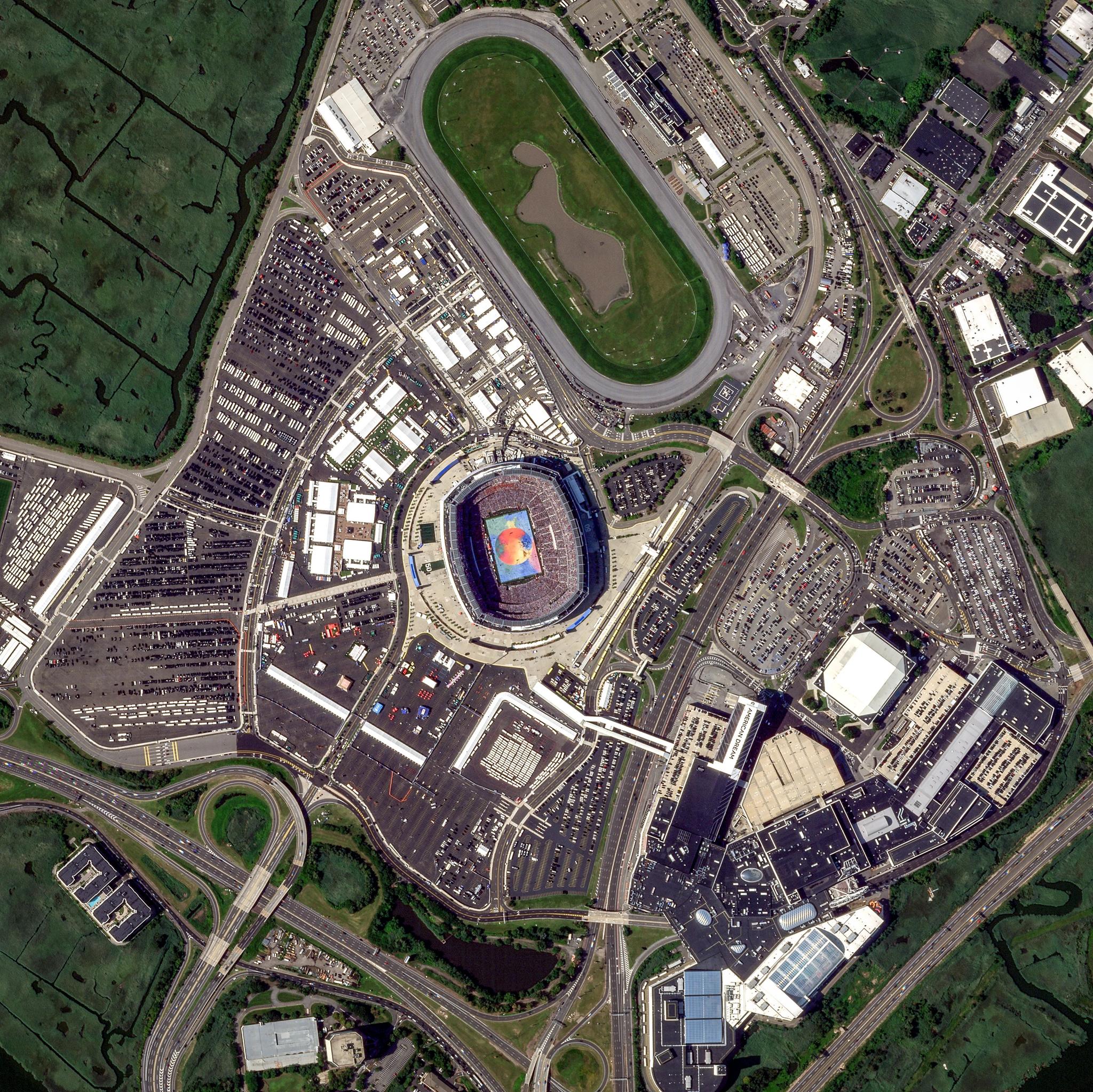
SkySat image of New York New Jersey Stadium, captured on July 19, 2026. © 2026, Planet Labs PBC. All Rights reserved.
StoriesEnduring moments in sports history are shaped by unforgettable performances, dramatic upsets, and massive championship celebrations.
On July 19, Spain lifted the 2026 FIFA World Cup trophy at New York New Jersey Stadium, bringing to a close the largest tournament in the competition's history. With a record 48 teams competing across 16 stadiums in Mexico, Canada, and the United States, this World Cup unfolded on an unprecedented scale.
Throughout the competition, our satellites captured each host venue from above. From dense urban neighborhoods and waterfront skylines to woodland backdrops and sprawling suburbs, each stadium reflects the unique geography of its surrounding city. Together, these images offer a different perspective on the places where fans experienced the World Cup — from the stands and from living rooms around the world.
Mexico
The 2026 FIFA World Cup kicked off in Mexico, where three host cities carried the tournament from its opening match into the knockout rounds. Across Mexico City, Guadalajara, and Monterrey, the stadiums reflected the country’s varied urban landscapes and provided the backdrop for some of the tournament’s earliest drama.
Mexico City Stadium
Mexico City Stadium served as the heart of the host nation’s World Cup run, welcoming Mexico for four matches from the tournament opener through the Round of 16. After three victories at the venue, the host’s campaign came to an end with Harry Kane's decisive penalty kick for England.
The historic stadium is embedded within Mexico City’s vast urban landscape, surrounded by dense neighborhoods that extend in every direction.
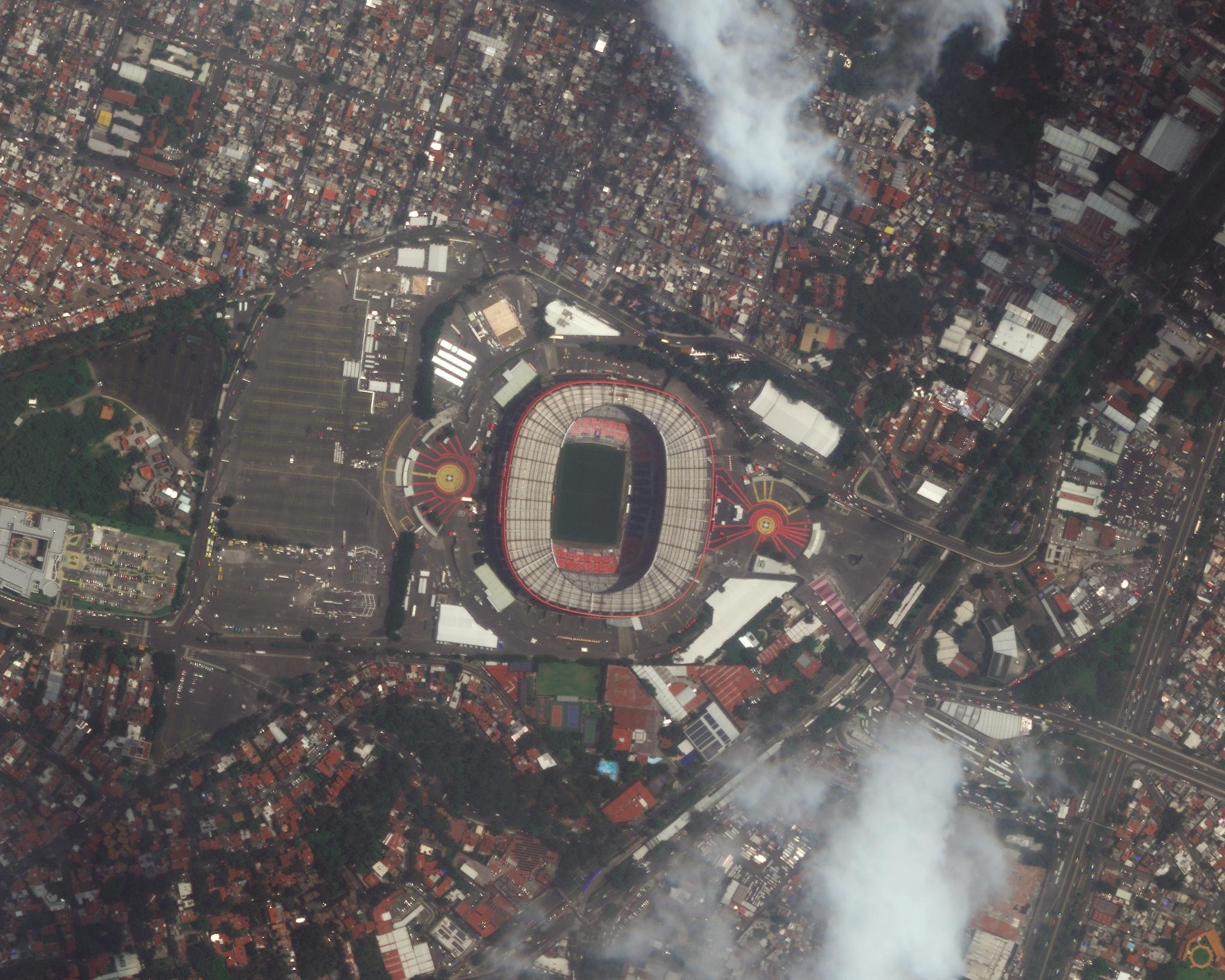
Pelican • Mexico City, Mexico • July 15, 2026
Guadalajara Stadium
One of Mexico's biggest group-stage moments came at Guadalajara Stadium, where the host nation defeated Korea Republic 1–0 to secure its place in the knockout rounds.
From above, the stadium is framed by mixed-use neighborhoods, open spaces, and major transportation corridors, offering a contrast to many of the tournament's more characteristically urban venues.
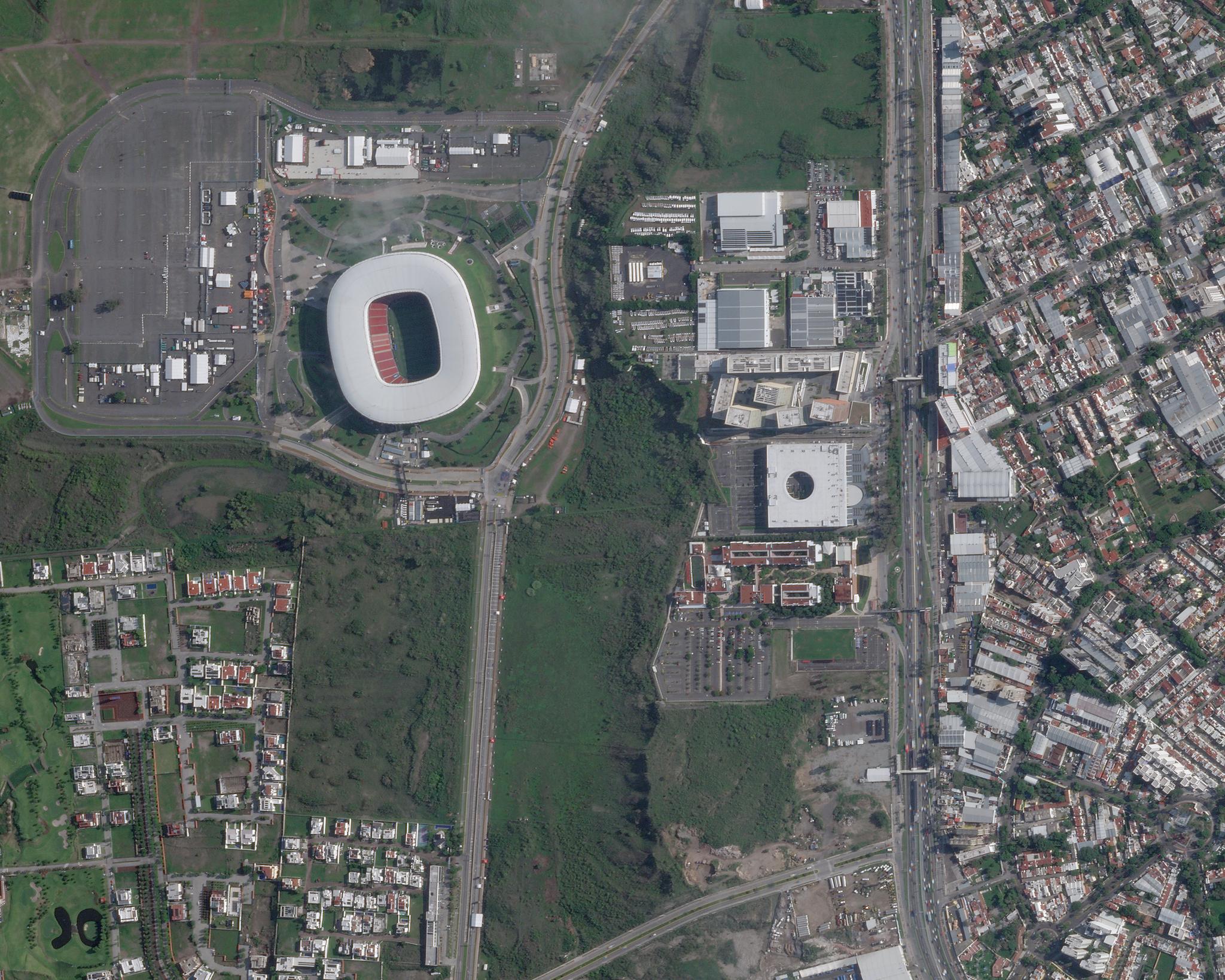
SkySat • Guadalajara, Mexico • June 24, 2026
Monterrey Stadium
Monterrey Stadium hosted four FIFA World Cup matches, culminating in a dramatic Round of 32 clash where Morocco eliminated the Netherlands in a penalty shootout after a 1–1 draw.
Nestled in the Sierra Madre foothills, the stadium stands out against the nearby mix of neighborhoods, major roadways, and greenways.
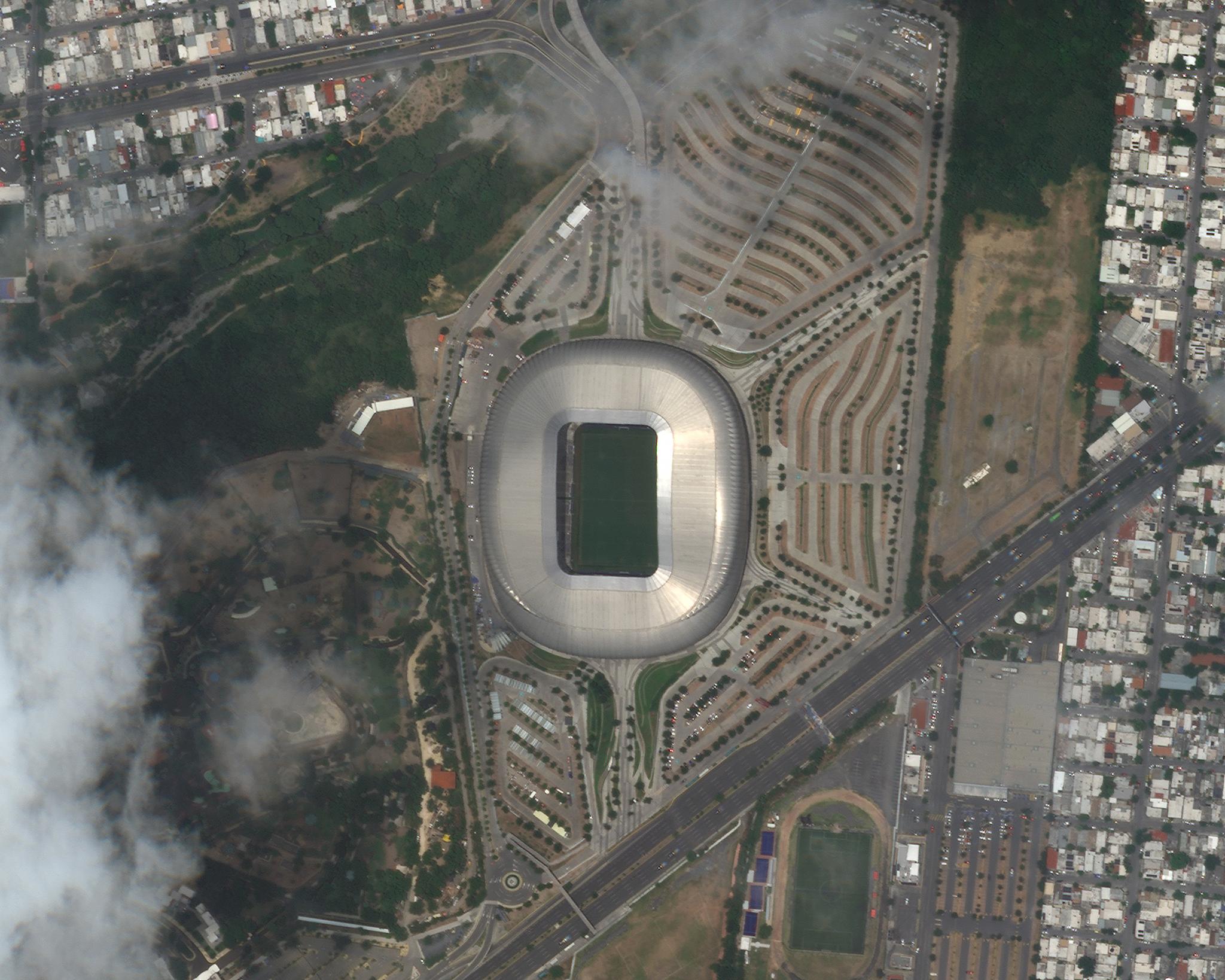
Pelican • Monterrey, Mexico • July 13, 2026
Canada
Canada's two host cities paired hometown moments with memorable knockout drama. From Vancouver to Toronto, the tournament showcased world-class football against a backdrop of two vibrant waterfront cities.
BC Place Vancouver
BC Place Vancouver welcomed Canada's hometown victories during the group stage before hosting a scoreless Round of 16 showdown between Switzerland and Colombia. After 120 minutes without a goal, Switzerland prevailed in a dramatic tie-breaker, securing its first World Cup shootout victory.
The stadium's bright white roof stands out against Vancouver's skyline, with False Creek, high-rises, marinas, and waterfront development framing the venue on all sides.
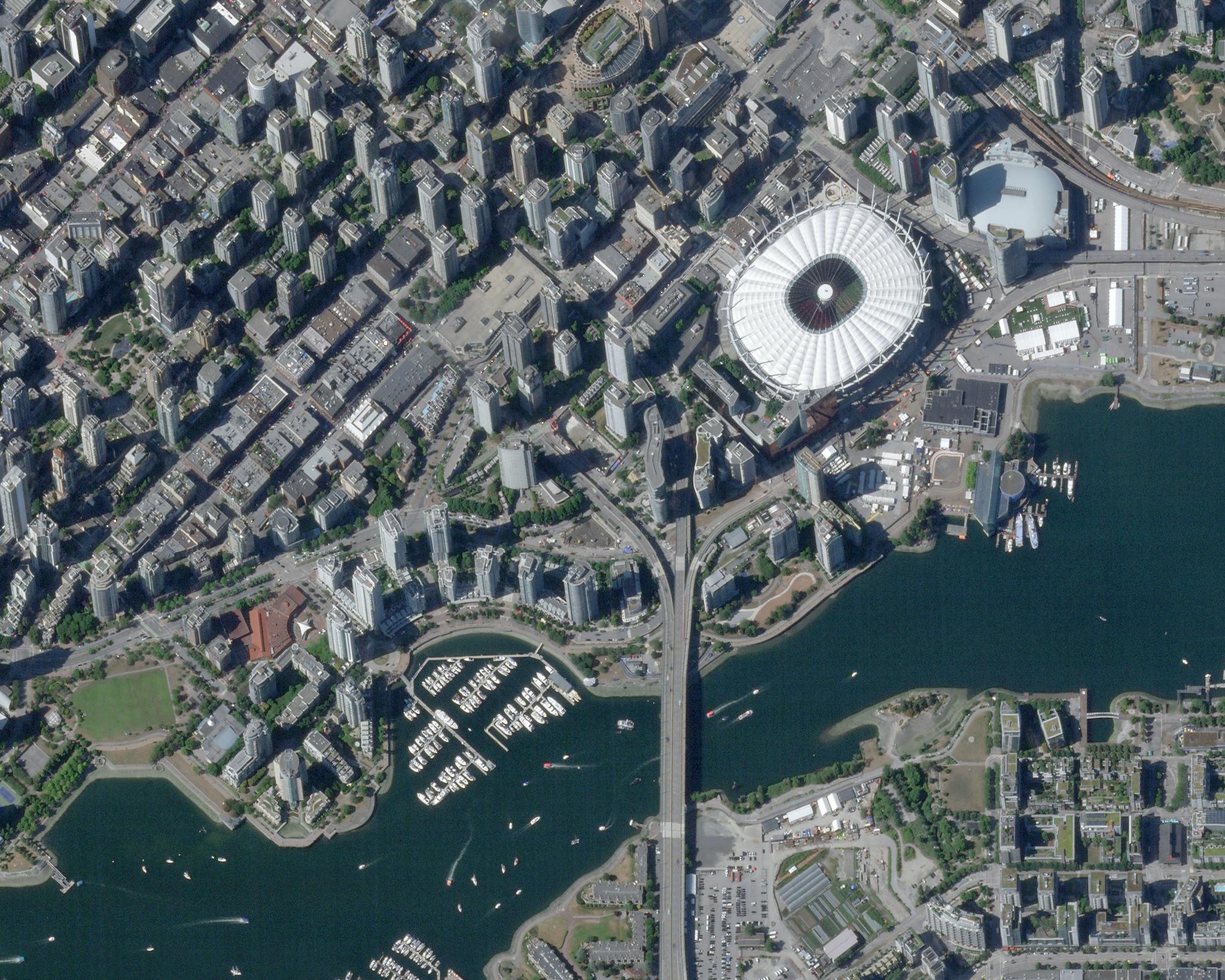
SkySat • Vancouver, Canada • July 4, 2026
Toronto Stadium
Toronto Stadium hosted one of the tournament's most anticipated Round of 16 matches, as Portugal's Cristiano Ronaldo and Croatia's Luka Modrić met for the final World Cup matchup of their legendary careers. Ronaldo's first World Cup knockout goal helped send Portugal to the quarterfinals.
Bordered by waterfront parks, marinas, and Toronto's harbor, the stadium lies just inland from Lake Ontario.
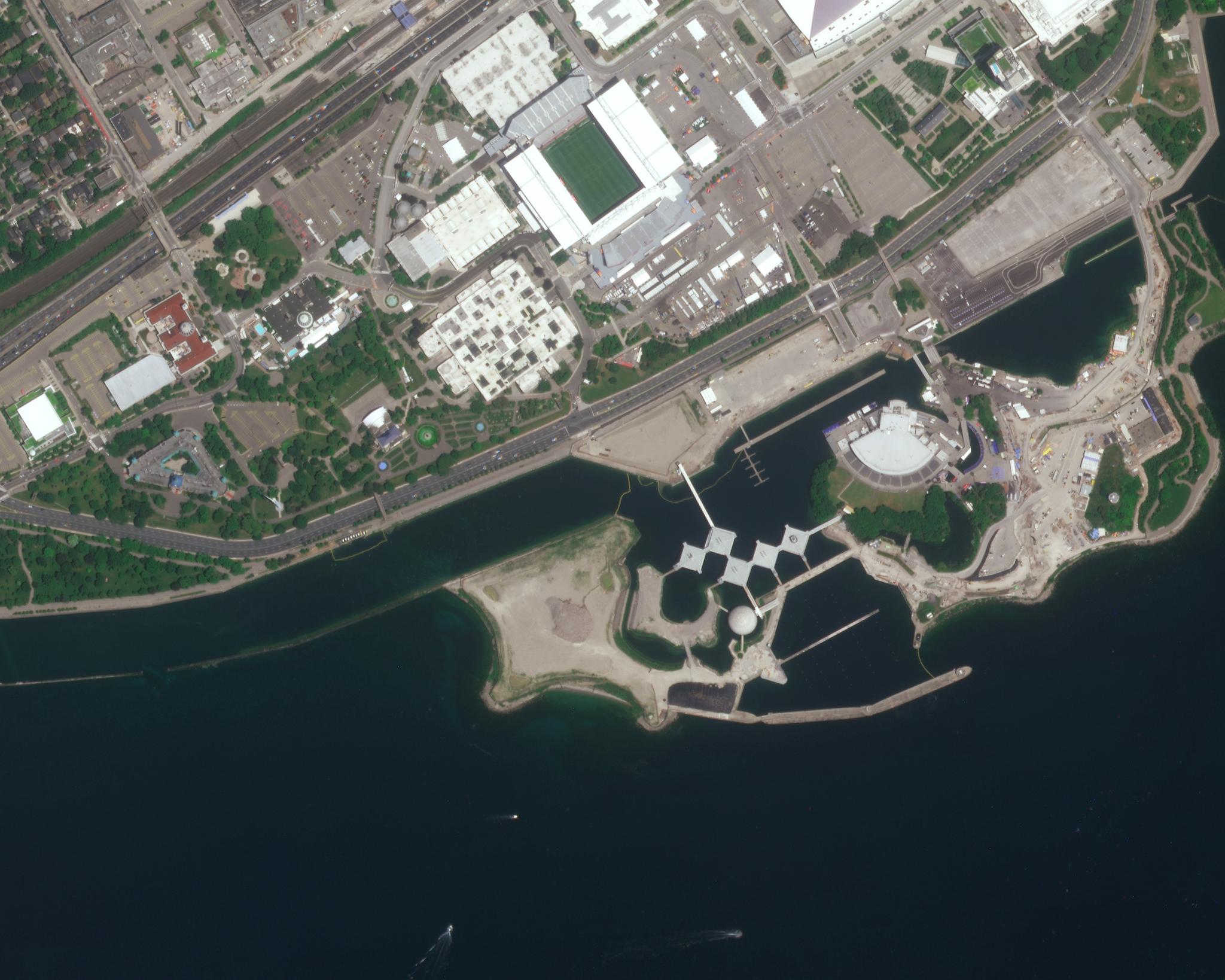
Pelican • Toronto, Canada • July 1, 2026
United States
The United States hosted the largest share of the tournament, with 11 stadiums stretching from the Pacific Coast to the Northeast. Together, they formed the backbone of the 2026 FIFA World Cup, welcoming everything from opening group-stage matches to the semifinals and final.
Seattle Stadium
Belgium erased a two-goal deficit at Seattle Stadium to defeat Senegal 3–2 in extra time, producing one of the tournament's most standout knockout matches.
The stadium sits just blocks from Elliott Bay, alongside neighboring T-Mobile Park (home of Seattle’s Major League Baseball team, the Mariners), with Seattle's working waterfront and container terminals visible nearby.
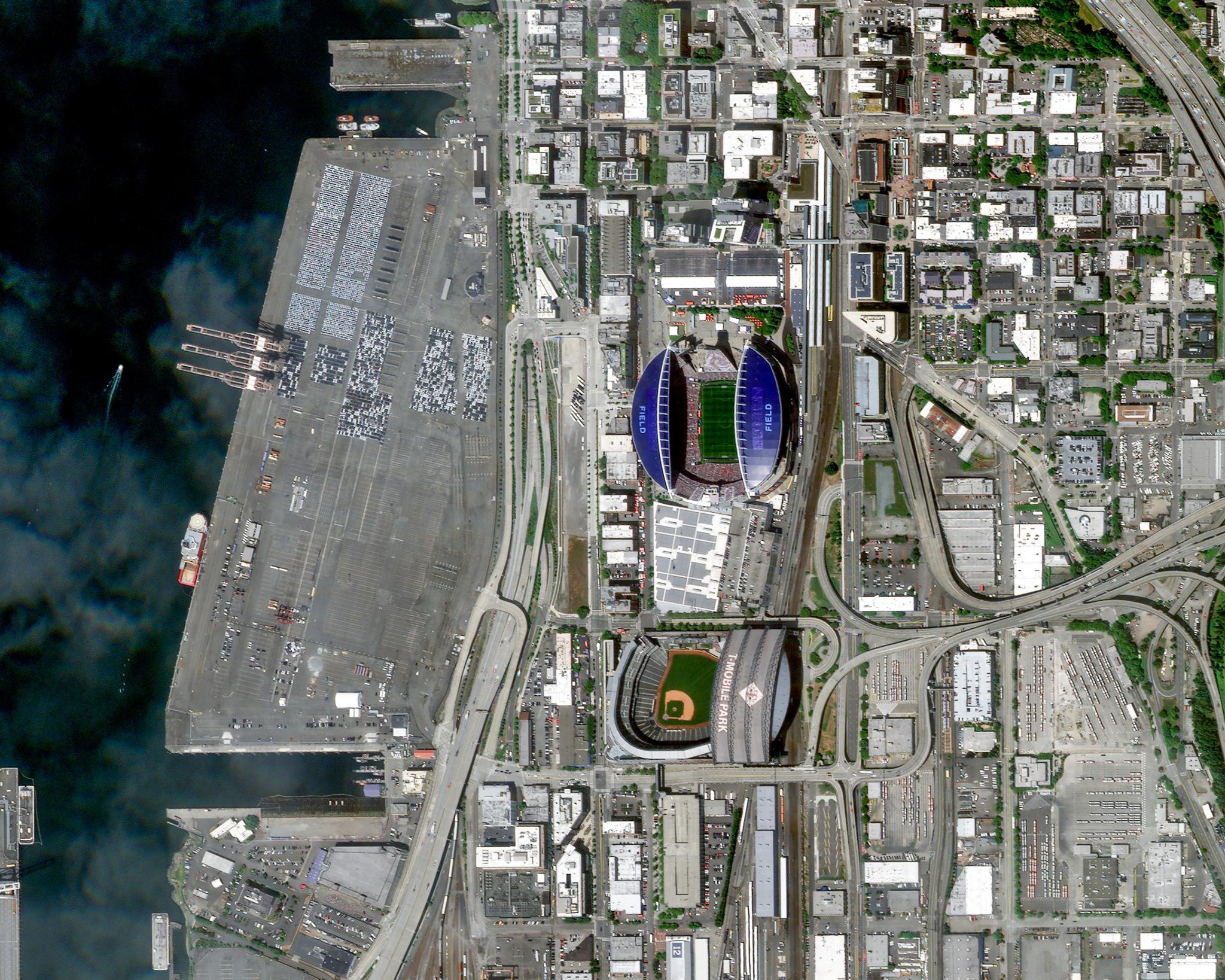
Pelican • Seattle, Washington, USA • June 15, 2026
San Francisco Bay Area Stadium
San Francisco Bay Area Stadium hosted five group-stage matches before the United States' 2–0 Round of 32 victory over Bosnia and Herzegovina, sending the host nation into the knockout rounds.
Office campuses, residential neighborhoods, and the roller coasters of California's Great America amusement park surround the stadium, highlighting its location in the heart of Silicon Valley.
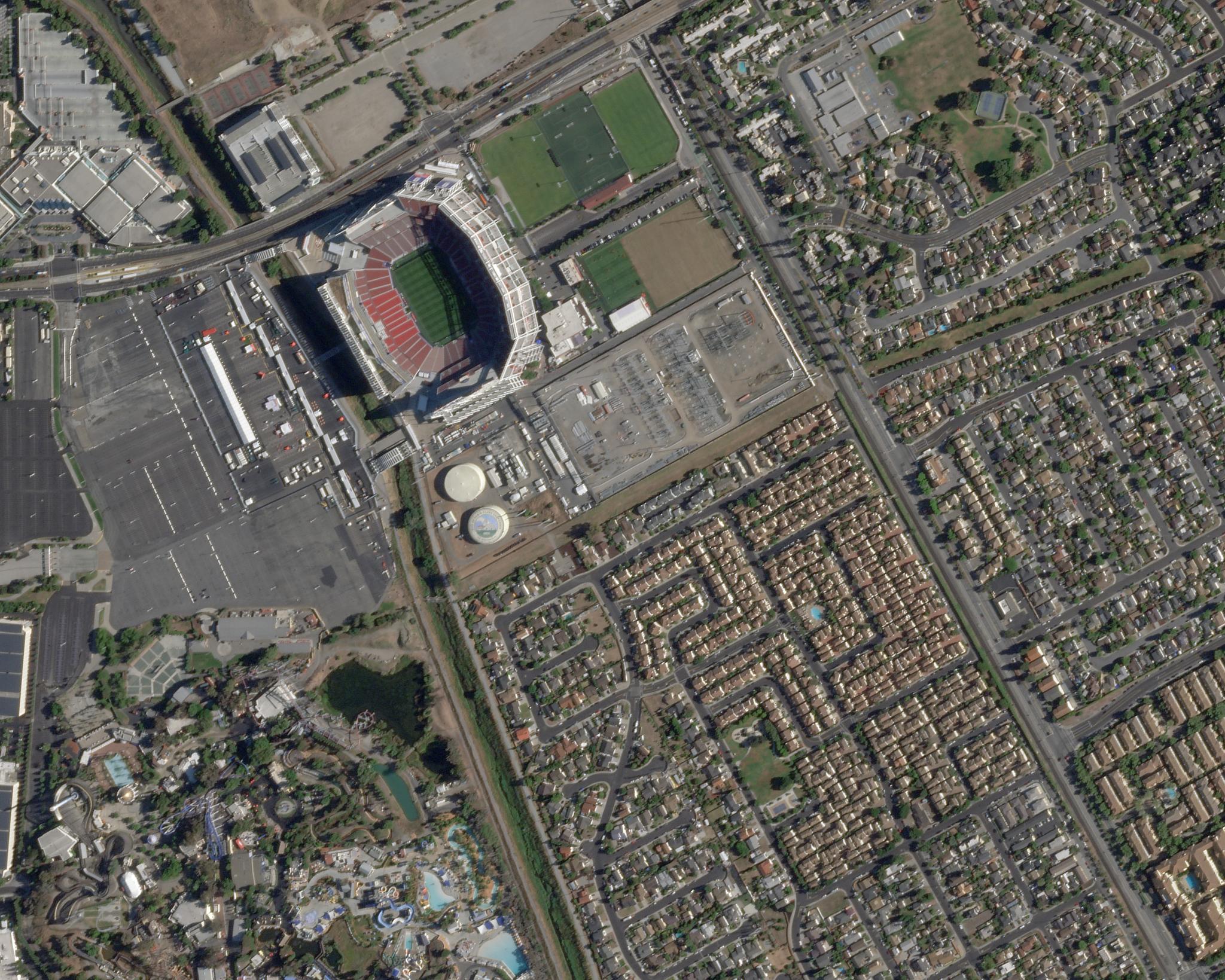
SkySat • Santa Clara, California, USA • June 11, 2026
Los Angeles Stadium
The first World Cup match played in the United States took place in Los Angeles, where the host nation opened with a 4–1 victory over Paraguay. Weeks later, Spain defeated Belgium to advance to the semifinals.
The stadium's sweeping roof makes it one of the tournament's most recognizable venues, standing out amid the dense urban landscape of Inglewood and greater Los Angeles.
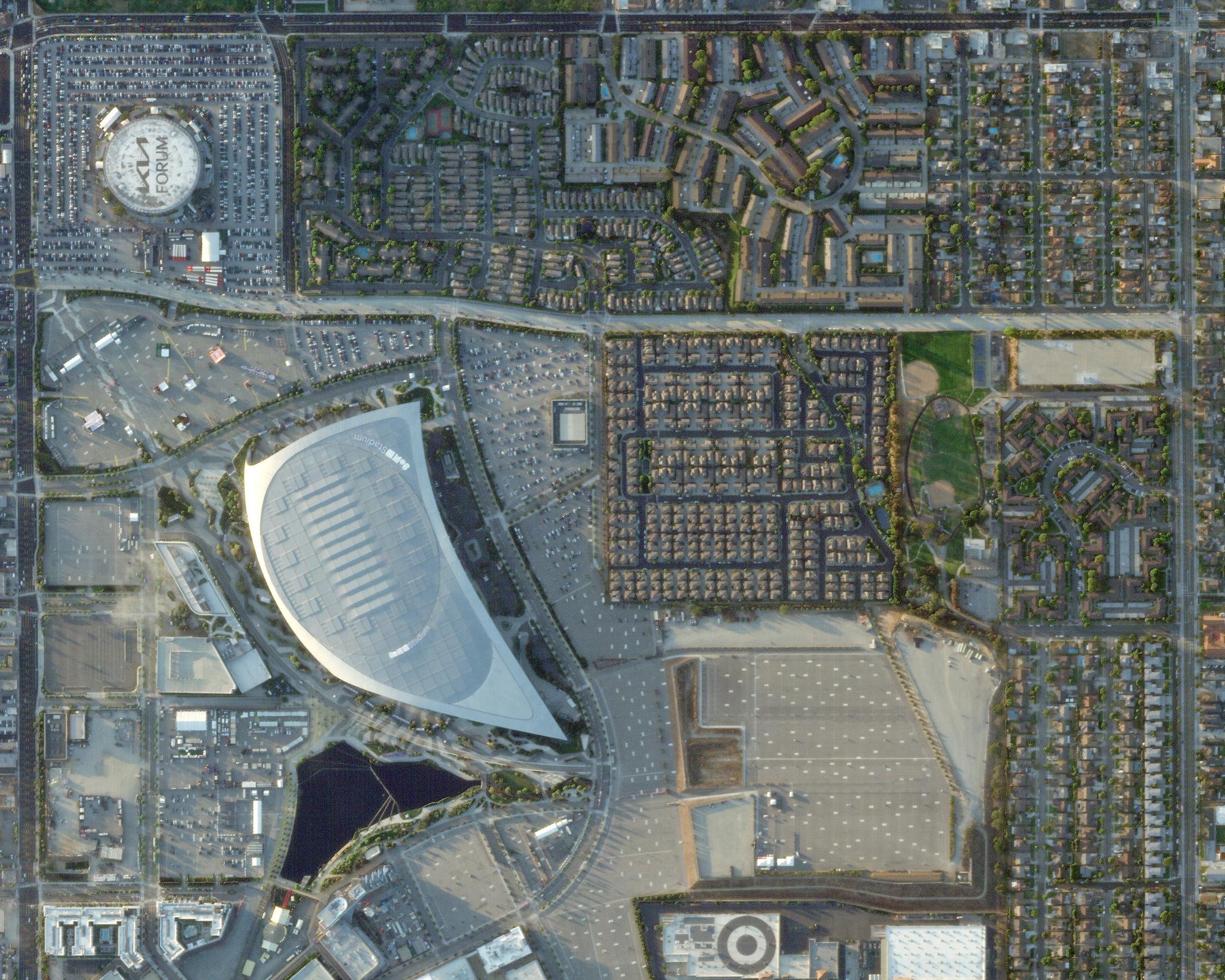
SkySat • Los Angeles, California, USA • June 12, 2026
Kansas City Stadium
Kansas City hosted the tournament's 100th match, where Lionel Messi became the first player to record 10 career World Cup assists as Argentina defeated Switzerland to reach the semifinals.
The stadium sits beside Kauffman Stadium (home of Major League Baseball team, the Kansas City Royals) within a vast sports complex framed by highways, parking lots, and surrounding woodlands.
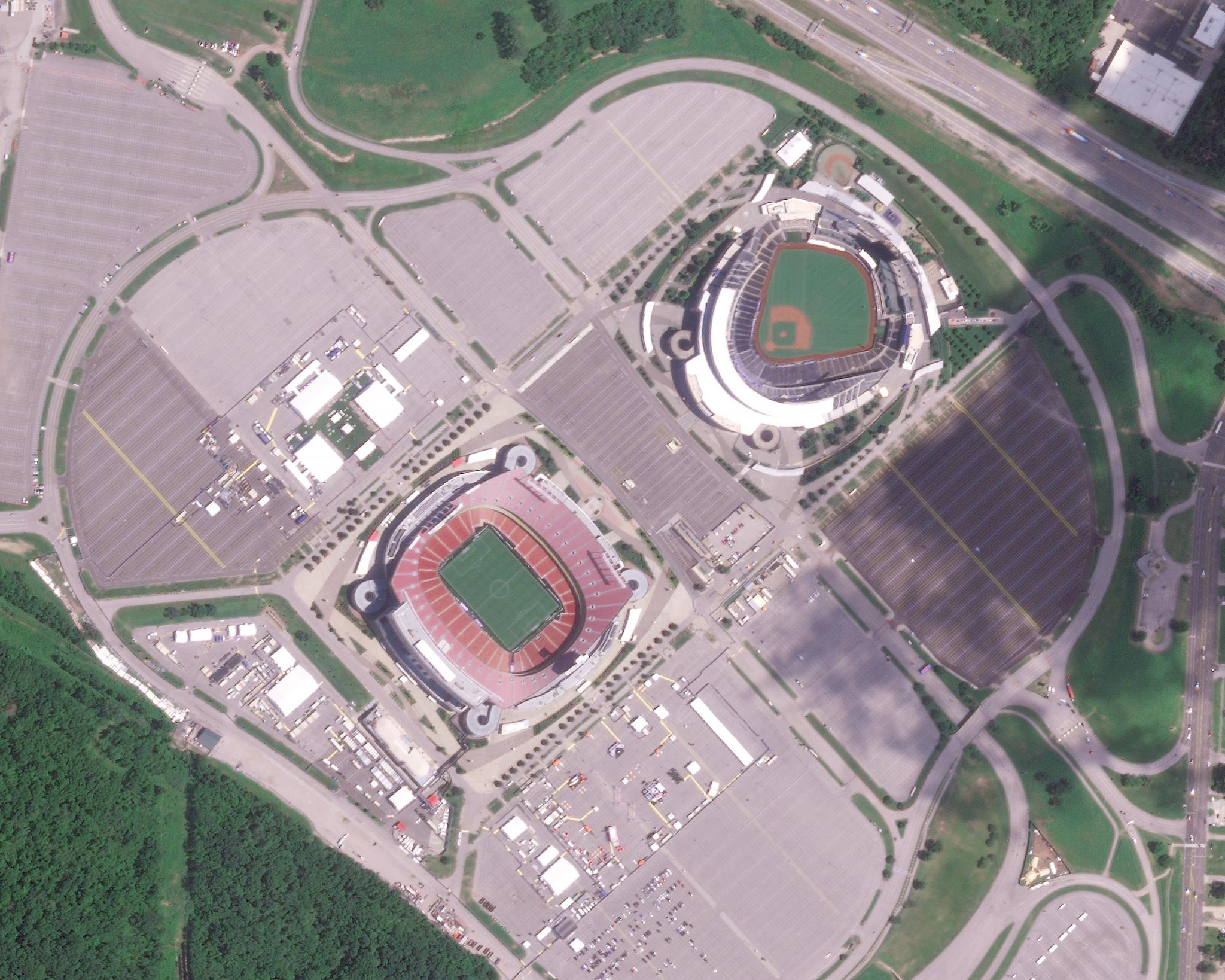
Pelican • Kansas City, Missouri, USA • June 16, 2026
Dallas Stadium
Dallas Stadium hosted two defining moments of Spain's tournament: a 1–0 Round of 16 victory over Portugal that ended Cristiano Ronaldo's World Cup career, followed by a 2–0 semifinal win over France that sent Spain to the final for the first time since 2010.
The stadium’s enormous retractable roof dominates the satellite view, surrounded by broad roadways, parking lots, waterways, and Arlington’s sprawling entertainment district between Dallas and Fort Worth.
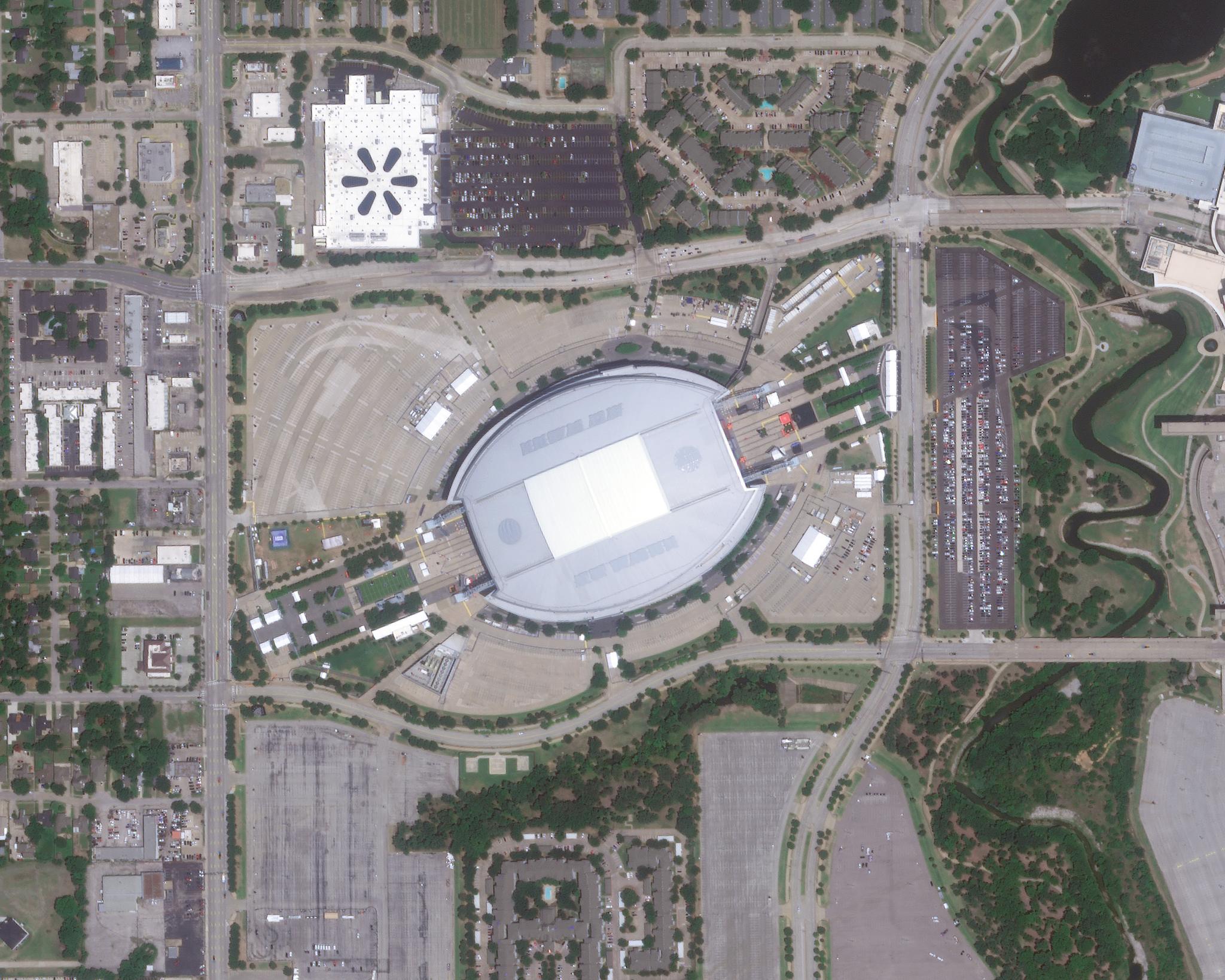
Pelican • Arlington, Texas, USA • June 14, 2026
Houston Stadium
Houston Stadium hosted a key chapter in Morocco’s knockout run, as the team defeated Canada 3–0 to reach the quarterfinals.
Sharing the complex with Houston Stadium is the iconic Astrodome, the world's first domed sports stadium. The satellite view captures more than half a century of sports history in a single frame.
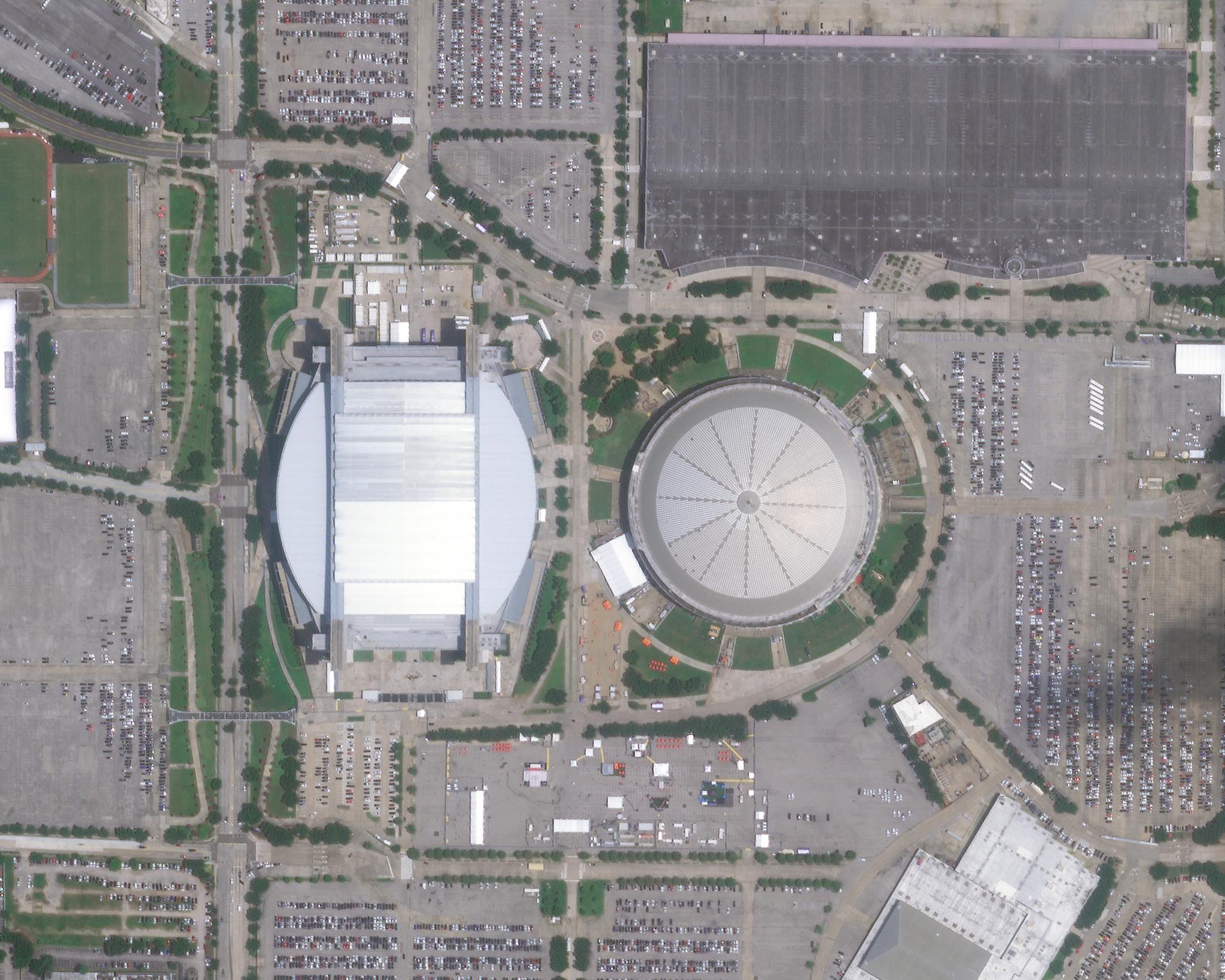
Pelican • Houston, Texas, USA • June 29, 2026
Atlanta Stadium
Lionel Messi authored two of the tournament's defining performances at Atlanta Stadium. He helped rescue Argentina against Egypt in the Round of 16, recording a goal and an assist before breaking down in tears after the victory. He then returned for the semifinal and set up both late goals in a 2–1 comeback over England that sent the defending champions onto the FIFA World Cup Final.
The stadium anchors Atlanta's downtown sports district, surrounded by parks, transit lines, and neighboring venues.
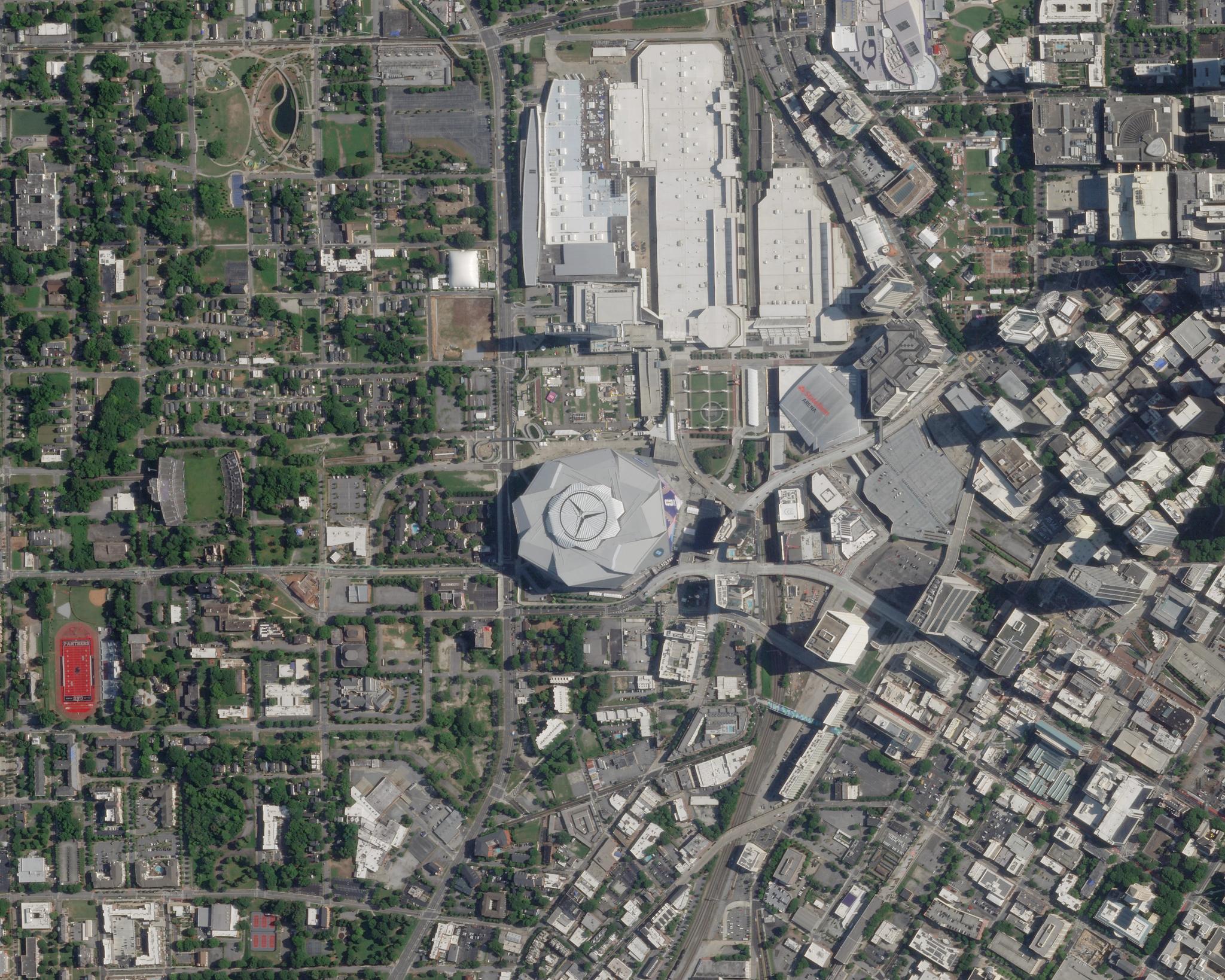
SkySat • Atlanta, Georgia, USA • June 6, 2026
Miami Stadium
Miami Stadium hosted three of the tournament’s biggest matches. Argentina survived an extra-time scare against Cape Verde in the Round of 32, England edged Norway behind Jude Bellingham’s extra-time winner in the quarterfinals, and the Three Lions returned to defeat France 6–4 in the bronze final. Despite the loss, France’s Kylian Mbappé finished the tournament with 10 goals — two more than Lionel Messi — to claim the Golden Boot as the competition’s leading scorer.
Nestled among South Florida's canals, neighborhoods, and roadways, Miami Stadium is located roughly 30 minutes north of downtown Miami, where its sprawling footprint stands out from the surrounding suburban landscape.
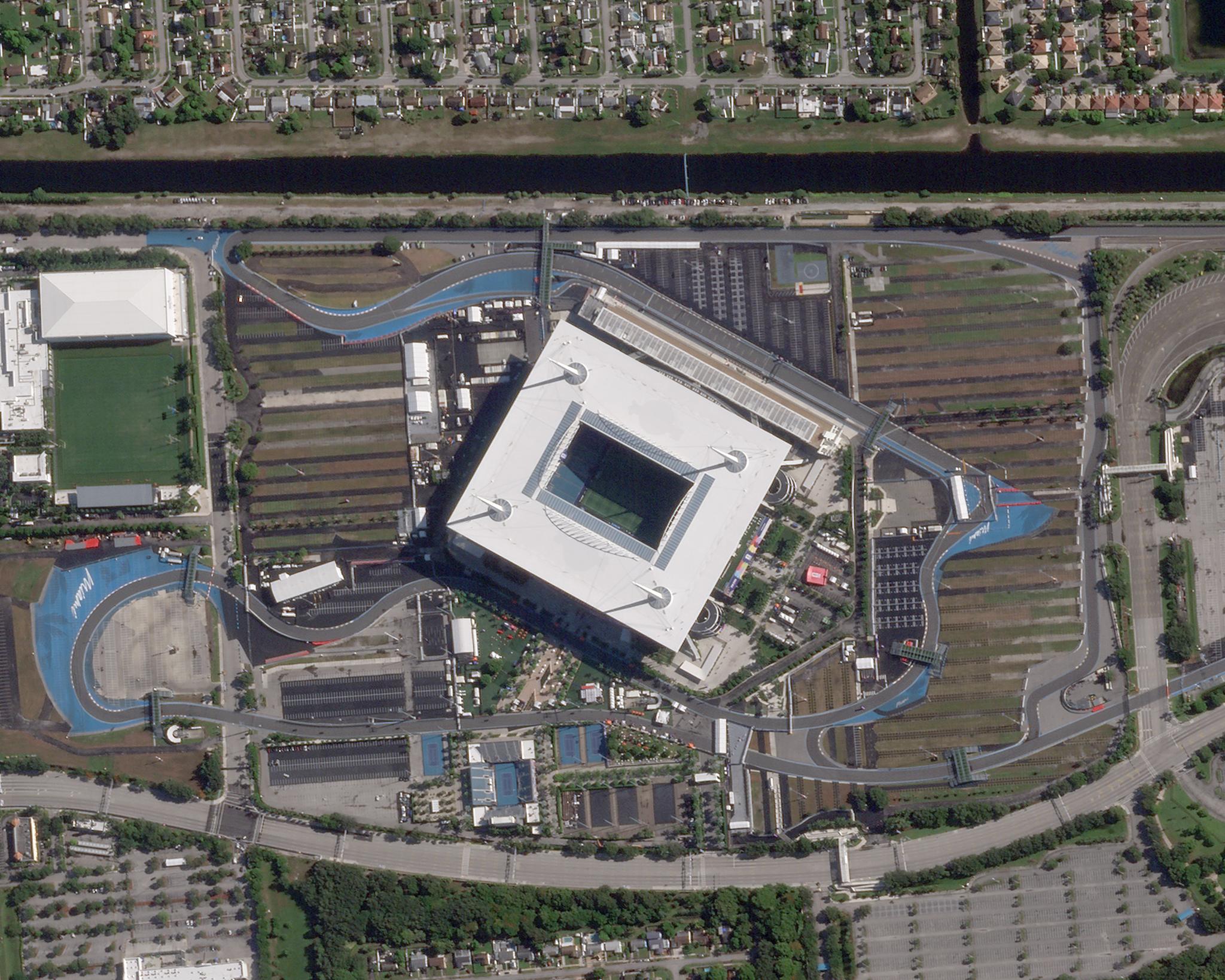
SkySat • Miami Gardens, Florida, USA • June 21, 2026
Philadelphia Stadium
Philadelphia Stadium hosted five group-stage matches before France defeated Paraguay 1–0 in the Round of 16 on July 4.
Captured that same day, the satellite image shows the stadium filled with fans and surrounded by Philadelphia’s larger sports complex, including Citizens Bank Park and Xfinity Mobile Arena.
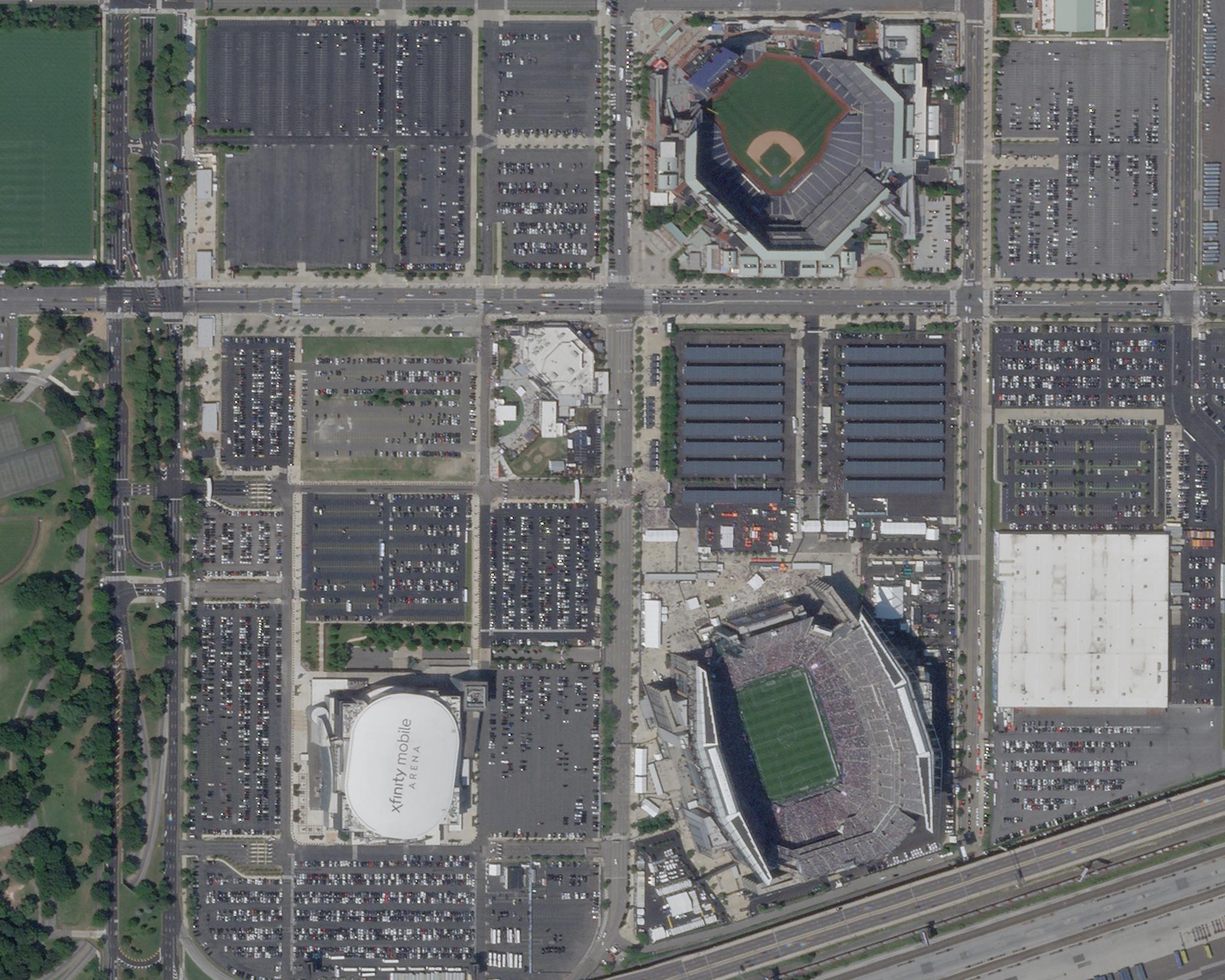
SkySat • Philadelphia, Pennsylvania, USA • July 4, 2026
Boston Stadium
France punched its ticket to the semifinals with a 2–0 victory over Morocco at Boston Stadium, bringing one of the tournament's most memorable underdog runs to an end.
The stadium sits in Foxborough, southwest of downtown Boston. Surrounded by woodlands, it offers a different setting than many of the tournament's urban venues.
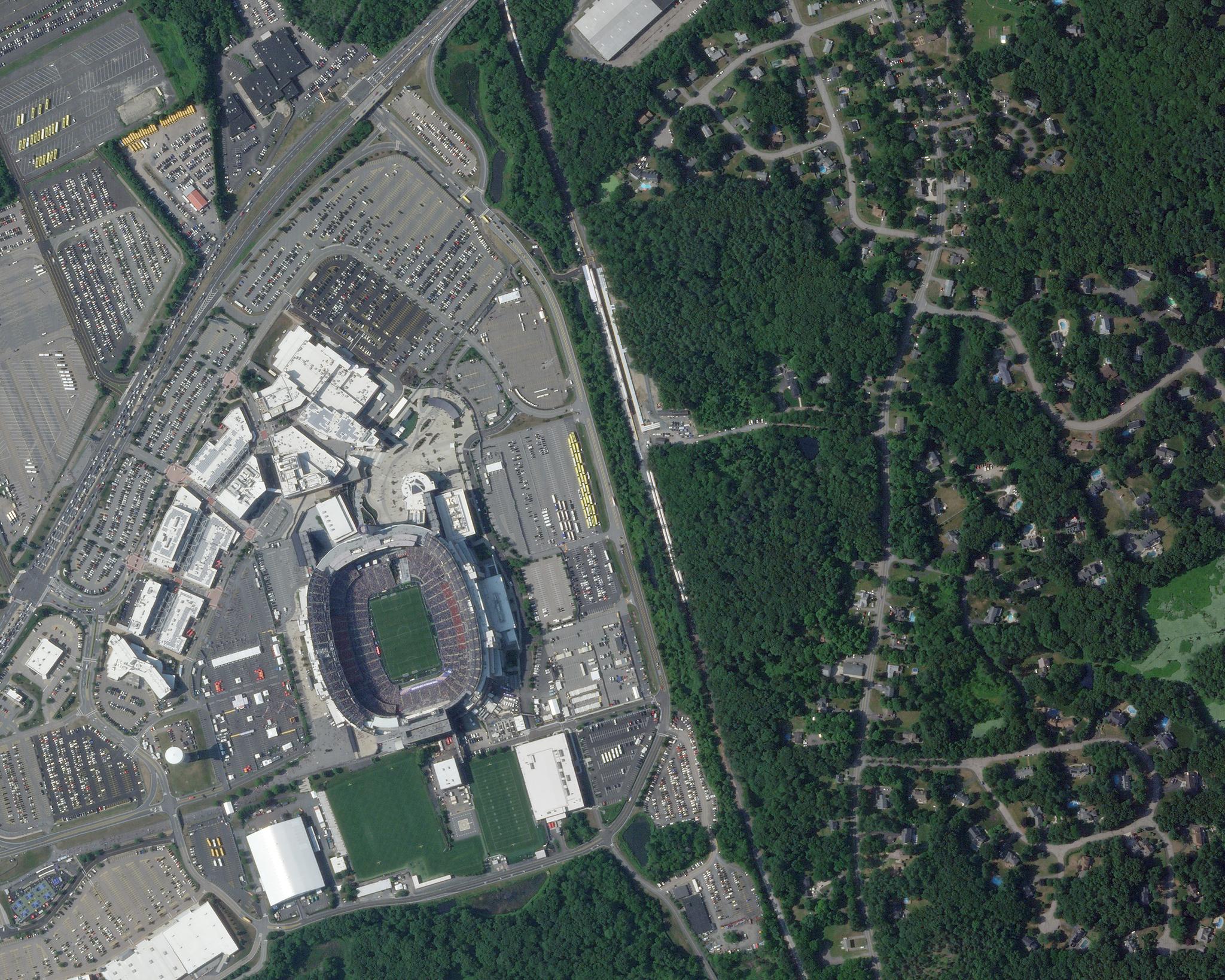
SkySat • Foxborough, Massachusetts, USA • June 29, 2026
The Final
New York New Jersey Stadium
New York New Jersey Stadium hosted one of the tournament's biggest upsets and its defining moment. Erling Haaland scored twice to lead Norway past Brazil in a stunning Round of 16 victory before the venue welcomed the FIFA World Cup Final on Sunday, July 19, where Spain defeated defending champion Argentina 1–0 after extra time to lift its second men's World Cup trophy.
This view of New York New Jersey Stadium during the first FIFA World Cup Final halftime show reveals a packed crowd celebrating inside the venue while an estimated 1.5 billion viewers tuned in from around the world. Located in East Rutherford, New Jersey, the stadium sits just a 30-minute drive from downtown Manhattan.
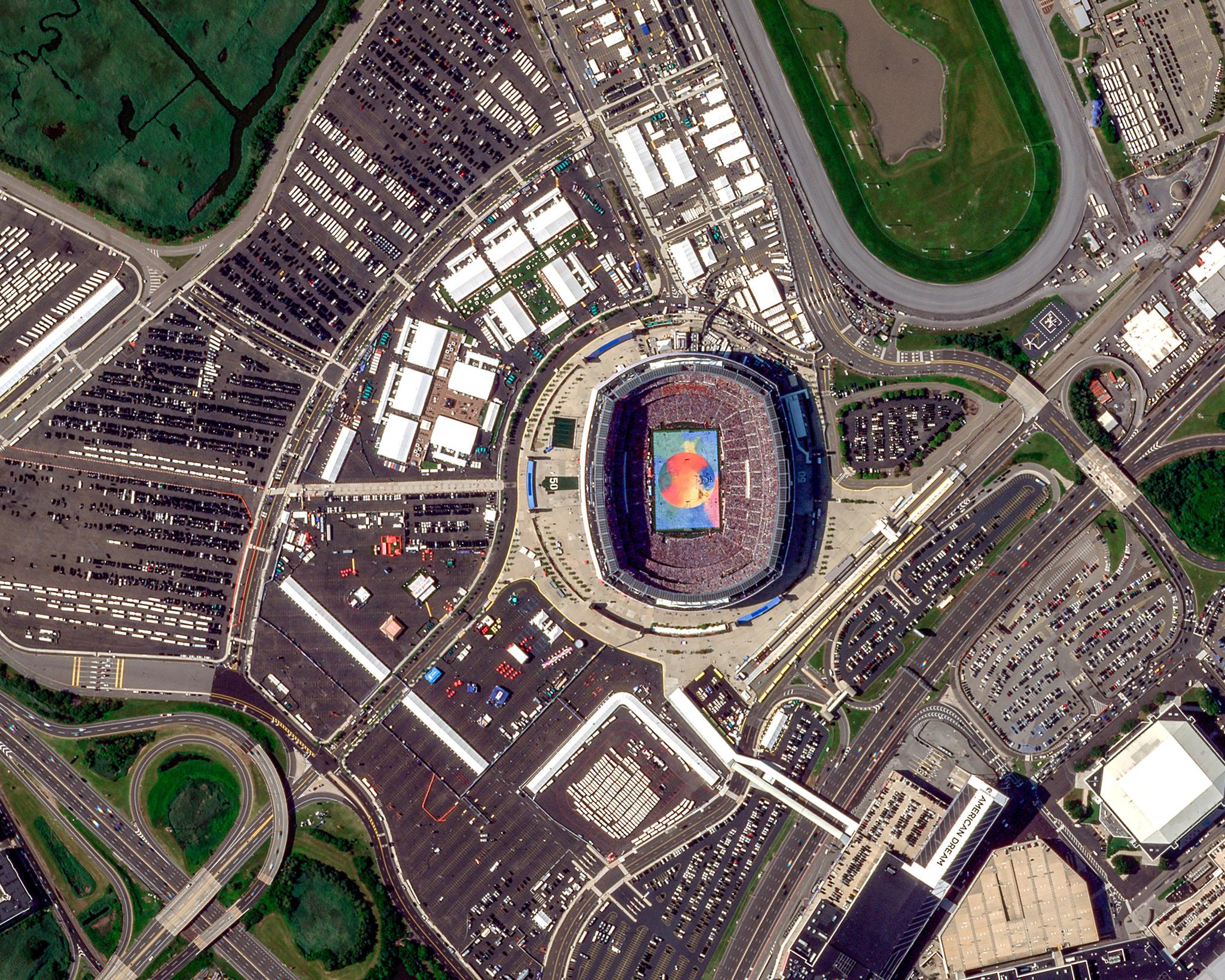
SkySat • East Rutherford, New Jersey, USA • July 19, 2026
Planet owns and operates the largest fleet of Earth imaging satellites in history, supporting three distinct constellations. You can learn more about each on our website.