
Announcing the Tanager Open Data Competition
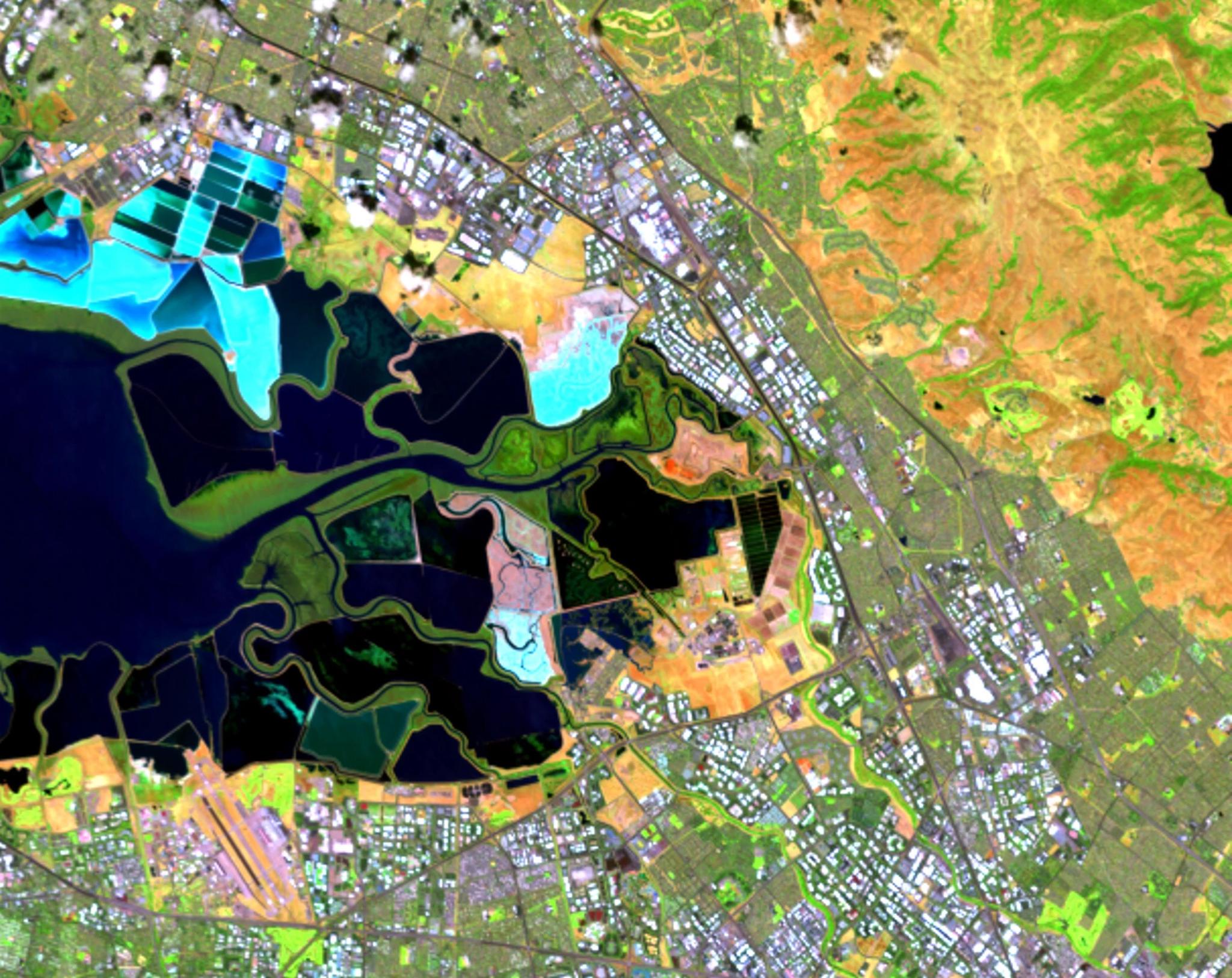
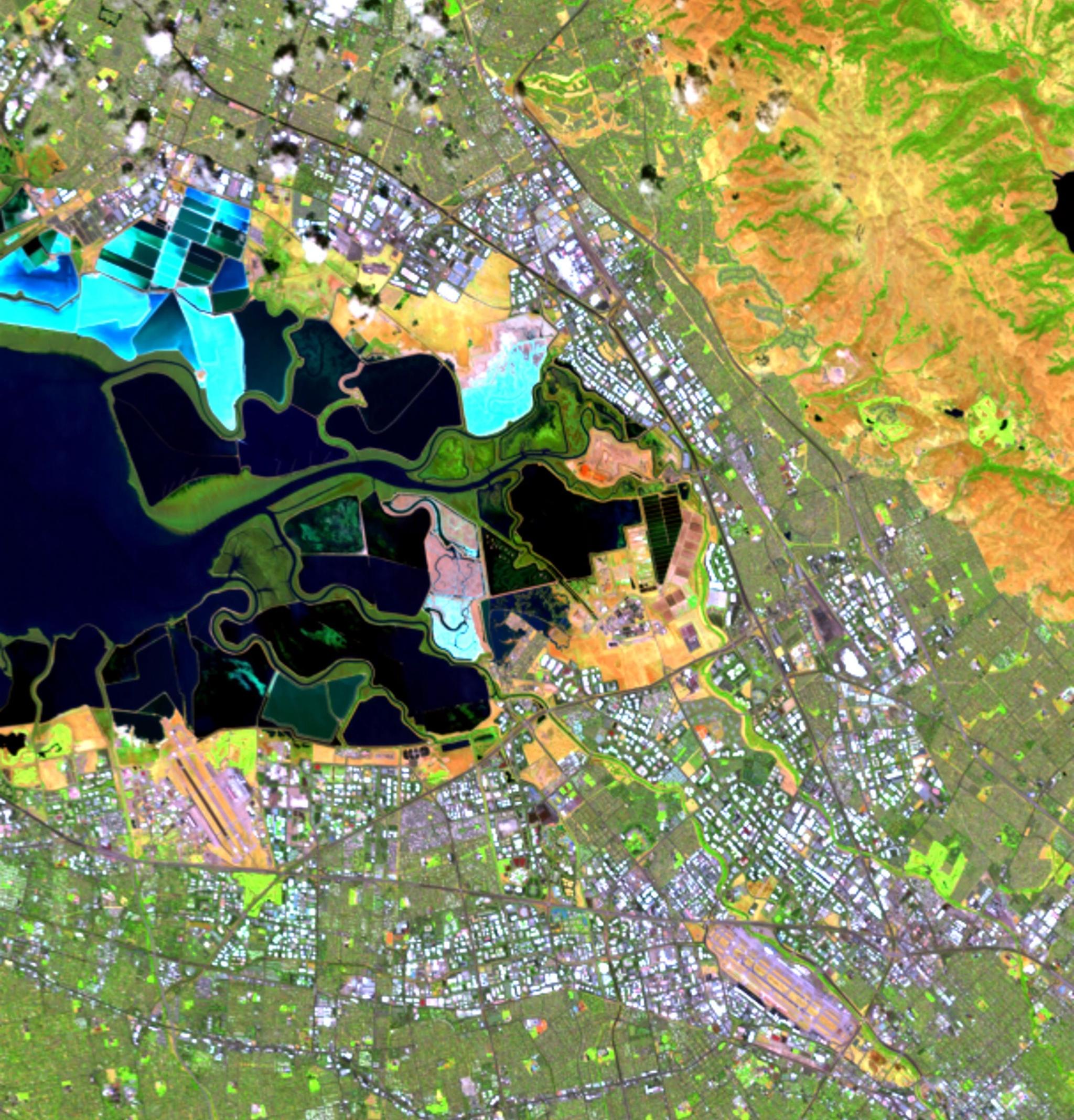
Salt ponds on San Francisco Bay in false color, captured July 21, 2025. © 2025 Planet Labs PBC. All Rights Reserved.
NewsThis article was written in collaboration with Amy Rosenthal and Keely Roth.
We are excited to share that our Tanager Open Data Competition launches, today! We welcome researchers, students, and analysts to use our open source imagery, available in the Tanager Open Data Catalog, to demonstrate how hyperspectral data from Planet can be used to make a difference for life on Earth.
Competition winners will be featured at AGU26 and collaborate with Planet to select up to 10 images for release into our Open STAC catalog to advance their ongoing research and contribute to a global digital public good. This is an opportunity for winners to amplify the impact of their work on a global stage.
How to Enter the Tanager Open Data Competition
Competition submissions can take a variety of forms: a case study analysis that addresses a real-world problem, a script that showcases a nifty way to process or visualize hyperspectral imagery, a comparative assessment of hyperspectral data performance, an adaptation of published methodology to Tanager data, or whatever you can imagine. To enter, follow these steps:
- Read the Competition Terms and Conditions and FAQs
- Register for the competition
- Follow the instructions in your welcome email to submit
Whatever you do, make sure to submit your materials by August 31, 2026! We look forward to collaborating with you on scientific discovery and open data.
Tanager, Planet’s Hyperspectral Mission
In August 2024, Planet launched Tanager-1, the first hyperspectral sensor to join our fleet. The Tanager program came about through a remarkable private-public partnership between Carbon Mapper, Planet, the NASA Jet Propulsion Lab, High Tide Foundation, Bloomberg Philanthropies, and others. This satellite, with its high-fidelity hyperspectral sensors, was developed to identify and monitor methane and carbon dioxide emissions, to help make large emissions events more transparent and actionable around the world, benefitting climate and human health.
To date, Tanager data has been used to detect thousands of methane and CO2 plumes, and observations from Tanager have made methane emission data accessible and actionable, supporting direct mitigation of methane leaks all over the world. But with over 400 narrowly sampled spectral bands, that’s not all Tanager can do! Scientific research has demonstrated the potential for hyperspectral imagery over a broad range of additional applications, including:
- Water quality and detection of toxic algal species
- Patterns of functional diversity in tropical forest canopies
- Pre- and post-wildfire monitoring
- Coral reef health and mapping live coral
- Mapping critical mineral resources
- Agricultural practices and impact
This growing body of research is helping to identify new strategies to improve sustainability, underpin environmental conservation, and enhance human security and wellbeing.
Using Insights From Space for Public Good
As a public benefit corporation, Planet is mandated to use space to help life on Earth. One way we do this is through our Education and Research Program, which includes discounted licenses for students and researchers. Through this growing community of users, we are democratizing access to cutting-edge data and accelerating discovery. As a result, an average of three scientific studies that use Planet data are published every day!
In support of this growing body of research, Planet has developed the Tanager Open Data Catalog, a public repository of Tanager-1 hyperspectral satellite imagery released under a CC BY license. Since the launch of Tanager-1, we have made two releases to this global open data STAC library. In the library, users will find over 150 Tanager scenes from all over the world, including all core imagery assets (e.g., radiance and surface reflectance in both Basic and Ortho formats). These scenes are grouped into categories, such as agriculture, wildfire, and urban, to help you discover relevant imagery for your research. We encourage you to explore them!
Advance Your Research With Tanager Data
By providing access to cutting-edge hyperspectral data, the Tanager Open Data Competition is an extraordinary opportunity to showcase the potential impact of your research. All entries must be received by August 31, 2026 — so start preparing your submission, today!

Ready to Get Started
Connect with a member of our Sales team. We'll help you find the right products and pricing for your needs.