Seeing Beyond Greenhouse Gases: Researchers Use the Tanager Satellite to Detect Ammonia From Space

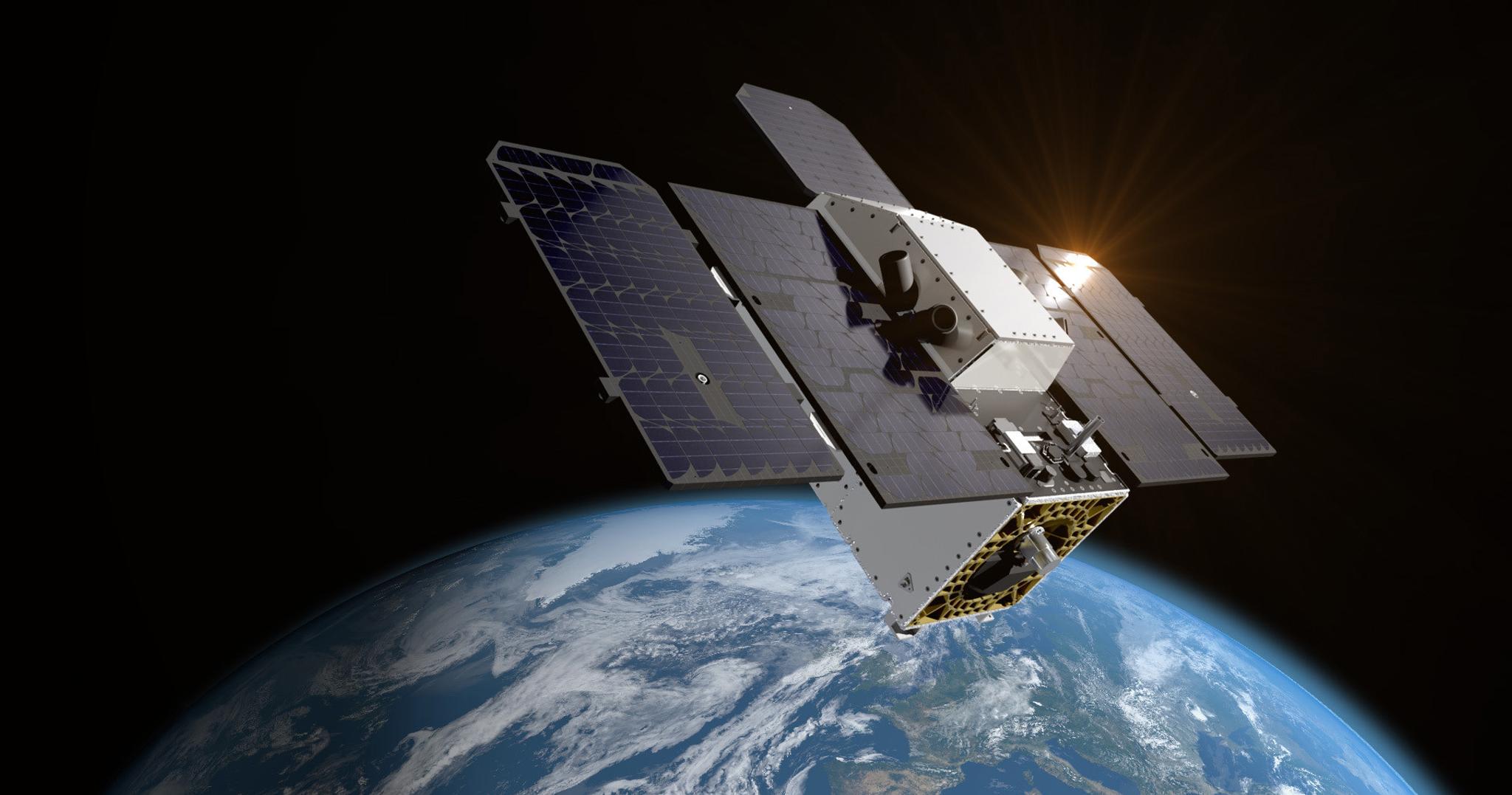
Remote sensing is entering a groundbreaking new era, made possible by Planet’s Tanager-1 satellite, which has a VSWIR hyperspectral sensor. Developed alongside Carbon Mapper and NASA JPL, this first-of-its-kind mission marks the first successful detection of point-source ammonia using shortwave infrared imaging spectroscopy from orbit. By capturing multiple pollutants at a facility-scale, Tanager provides the rigorous, granular transparency needed to address critical public health and emissions challenges in near-real time.
More information about this remarkable ammonia detection is in the article below. Or visit the Planet website to learn more about Tanager.
# # #
Seeing Beyond Greenhouse Gases: Researchers Use the Tanager Satellite to Detect Ammonia From Space
Originally published on the Carbon Mapper website.
Remote sensing technology is transforming the way society can use direct, observational data to better understand and act on greenhouse gas emissions. New research suggests that certain sensors can do more.
An ecosystem of tools and technologies, including high-resolution, granular data from satellites like Planet Labs PBC’s Tanager-1, which uses an instrument called an imaging spectrometer to "see" methane, offers transparency on the exact sources of large methane emissions. This information is useful for decision makers who can use it to pinpoint emissions and inform reduction strategies.
A recently published, peer-reviewed study from scientists at Carbon Mapper, NASA's Jet Propulsion Laboratory (JPL), and MIT offers a new potential use case for these imaging instruments: detecting ammonia, a pollutant that impacts air quality, public health and ecosystems.
The study, published in Proceedings of the National Academy of Sciences (PNAS), marks the first successful detection of ammonia using shortwave infrared imaging spectroscopy, a technology developed by NASA's JPL and deployed on Planet’s Tanager-1.
As a proof of concept, researchers used data collected by Tanager-1 to identify and measure ammonia emissions from industrial sources in Pakistan and Uzbekistan.
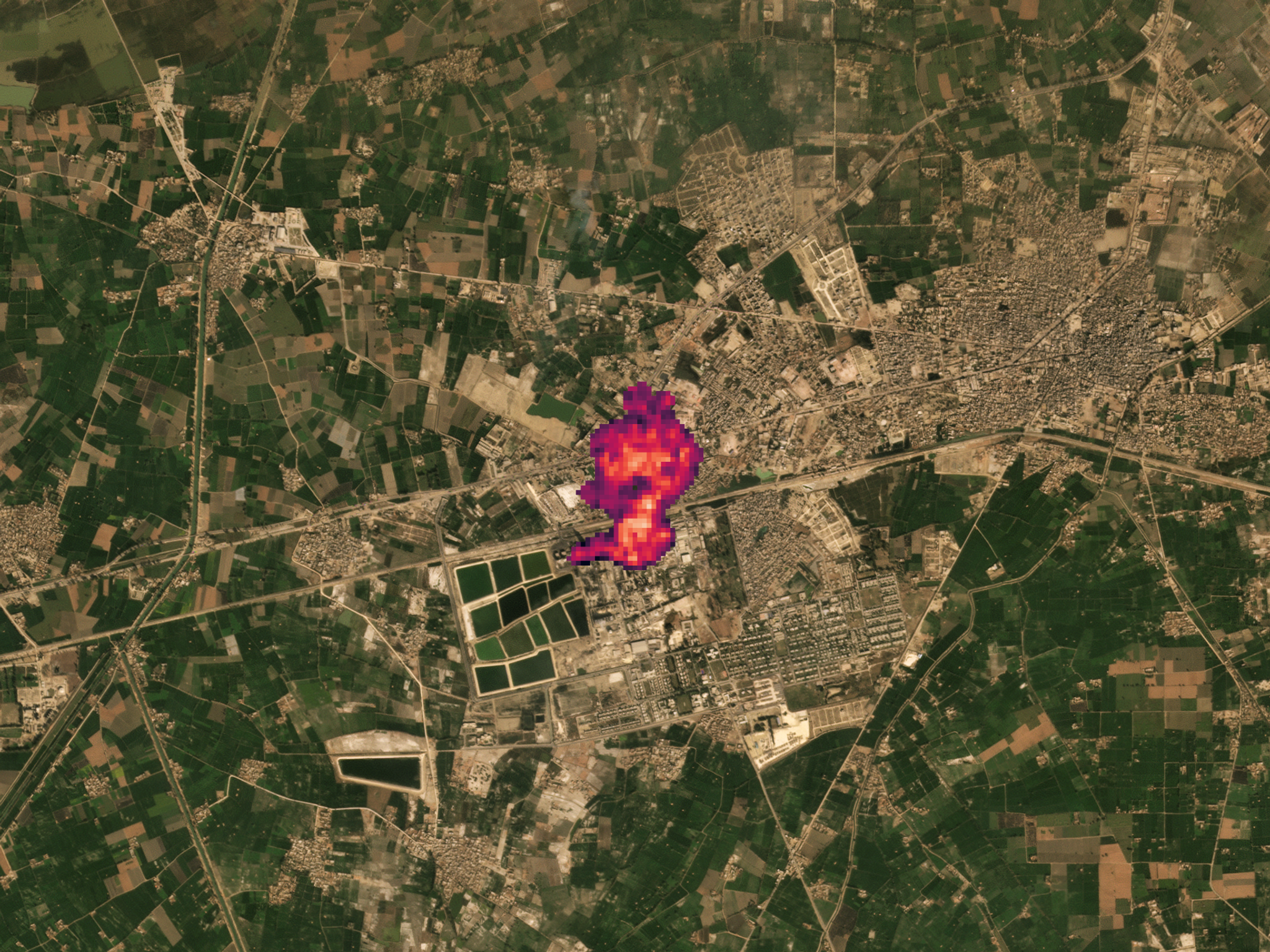
Ammonia emissions from an industrial source in Pakistan, detected using shortwave infrared radiance data from Planet’s Tanager-1.
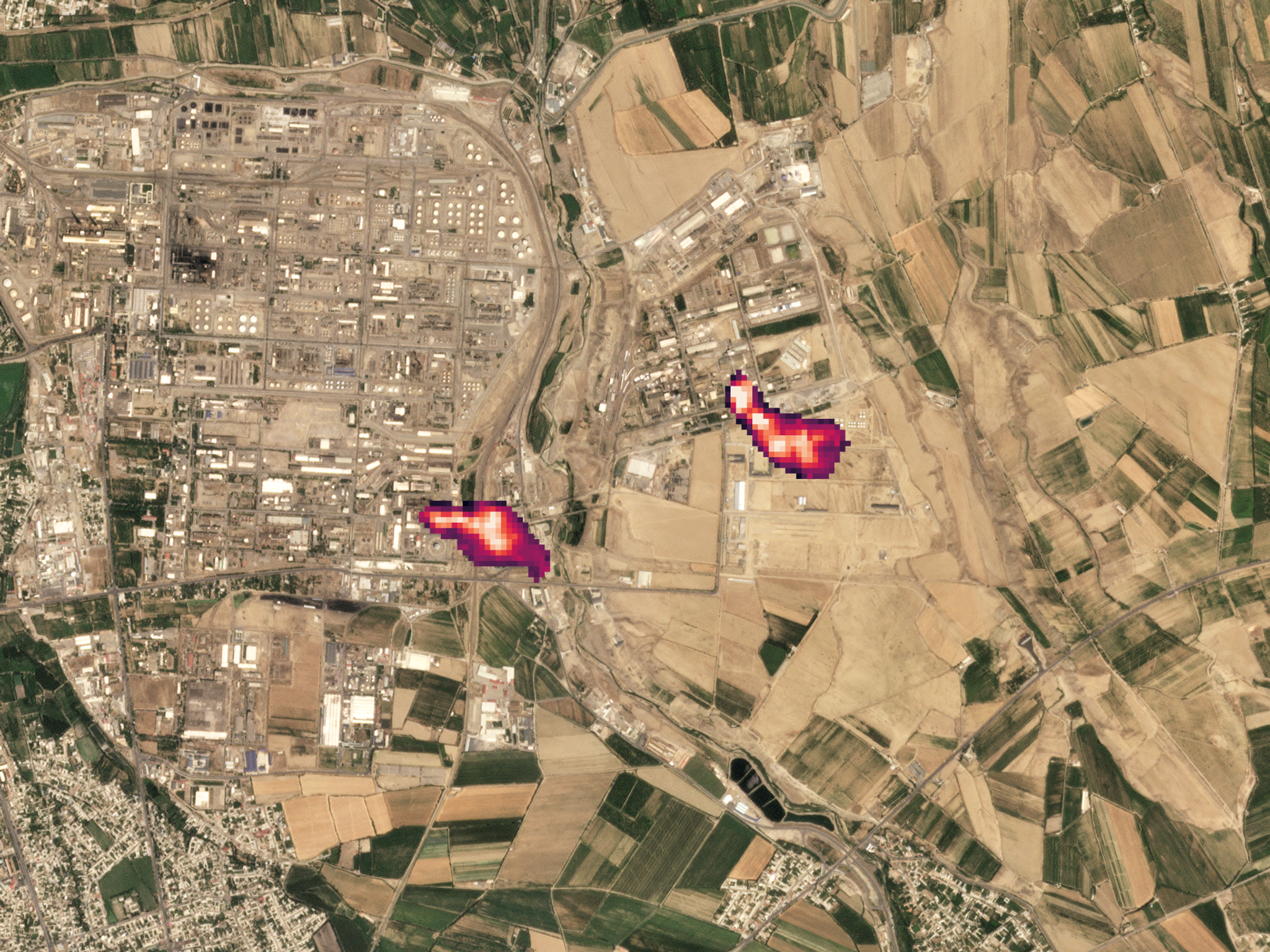
Ammonia emissions from an industrial source in Uzbekistan, detected using shortwave infrared radiance data from Planet’s Tanager-1.
Expanding Emissions We Can See From Space
Historically, the ability to observe ammonia has been heavily constrained to thermal infrared instruments, which face limitations in spatial resolution and sensitivity to identify emission sources. The approach outlined in this study uses shortwave infrared data — relying on reflected sunlight rather than thermal emissions — to detect ammonia signatures.
This method opens the door for a wider range of existing and future imaging spectrometers to contribute to ammonia monitoring.
Beyond demonstrating a new technology application, this research is a building block for the continued advancement of atmospheric science and imaging spectroscopy possibilities. The study also provides groundwork for incorporating ammonia into the growing ecosystem of independent, satellite-based super-pollutant monitoring.
Using Existing Tools to Reduce Emissions and Identify Harmful Pollutants
The ability to see multiple gases and pollutants at a facility scale with existing tools is especially valuable as society looks to solutions that can reduce GHGs and improve air quality and public health.
This research is intended to further scientific knowledge and unlock insights into the links between GHGs, such as methane and carbon dioxide, and co-pollutants, such as ammonia, that are often emitted alongside these gases and have public health and air quality impacts.
What Ammonia Is and Why It Matters
Ammonia (NH₃) is a colorless gas that’s emitted from processes like agriculture and livestock operations, fertilizer production and industrial activities.
The U.S. Centers for Disease Control and Prevention classifies ammonia as a hazardous substance, and exposure to elevated concentrations can cause respiratory irritation and other health effects.
Ammonia pollution can also disrupt soil chemistry, water quality and biodiversity.
In the atmosphere, the gas reacts with other compounds to form fine particulate matter, commonly known as PM2.5. These microscopic particles can travel long distances and are associated with health risks, including cardiovascular and respiratory diseases, as well as atmospheric haze. Because much of this particulate pollution would not form without ammonia, reducing ammonia emissions can significantly benefit regional air quality and public health.
A Quick Look at Agriculture Methane Emissions
The agriculture sector is one of the largest methane-emitting sectors, with activities such as livestock and manure management resulting in 32% of human-caused methane emissions, according to the 2021 Global Methane Assessment.
Mitigating methane in this sector is critical to slowing climate warming because the greenhouse gas has more than 80 times the warming power of CO2 over the first 20 years of its life.
Detecting and pinpointing large point source emissions in this sector can be challenging due to the variability and dynamic nature of emissions sources. However, as observational challenges in other key sectors like oil and gas and waste continue to progress, the agriculture sector is ripe for opportunity.
Addressing agricultural methane emissions and co-pollutants like ammonia is crucial for improved climate health and social wellbeing.
Looking Forward: Carbon Mapper Scaling up Agriculture Emissions Data
Carbon Mapper is scaling up its investment in satellite and airborne operations to meet growing methane emissions data needs for all sectors, including agriculture.
Recently, we announced plans for a next-generation methane detection technology to help cut the climate's strongest pollutant, methane, along with other trace gases like ammonia. This study demonstrates our ability to do that — seeing beyond methane to pinpoint gases like ammonia for action.
We anticipate being able to leverage these new observing capabilities to bring greater transparency to climate and health impacts as well as key emissions reduction solutions globally.
Future use cases for this research and technology could include identifying ammonia hotspots in agricultural areas – potentially helping improve air quality and crop health.
As scientists continue to unlock new capabilities from imaging spectroscopy, one thing is becoming increasingly clear: The technologies developed to track greenhouse gases may also help us better understand the broader environmental challenges that affect communities around the world.