Sharing First Light Images From Tanager-2 and SuperDove Flock 4J

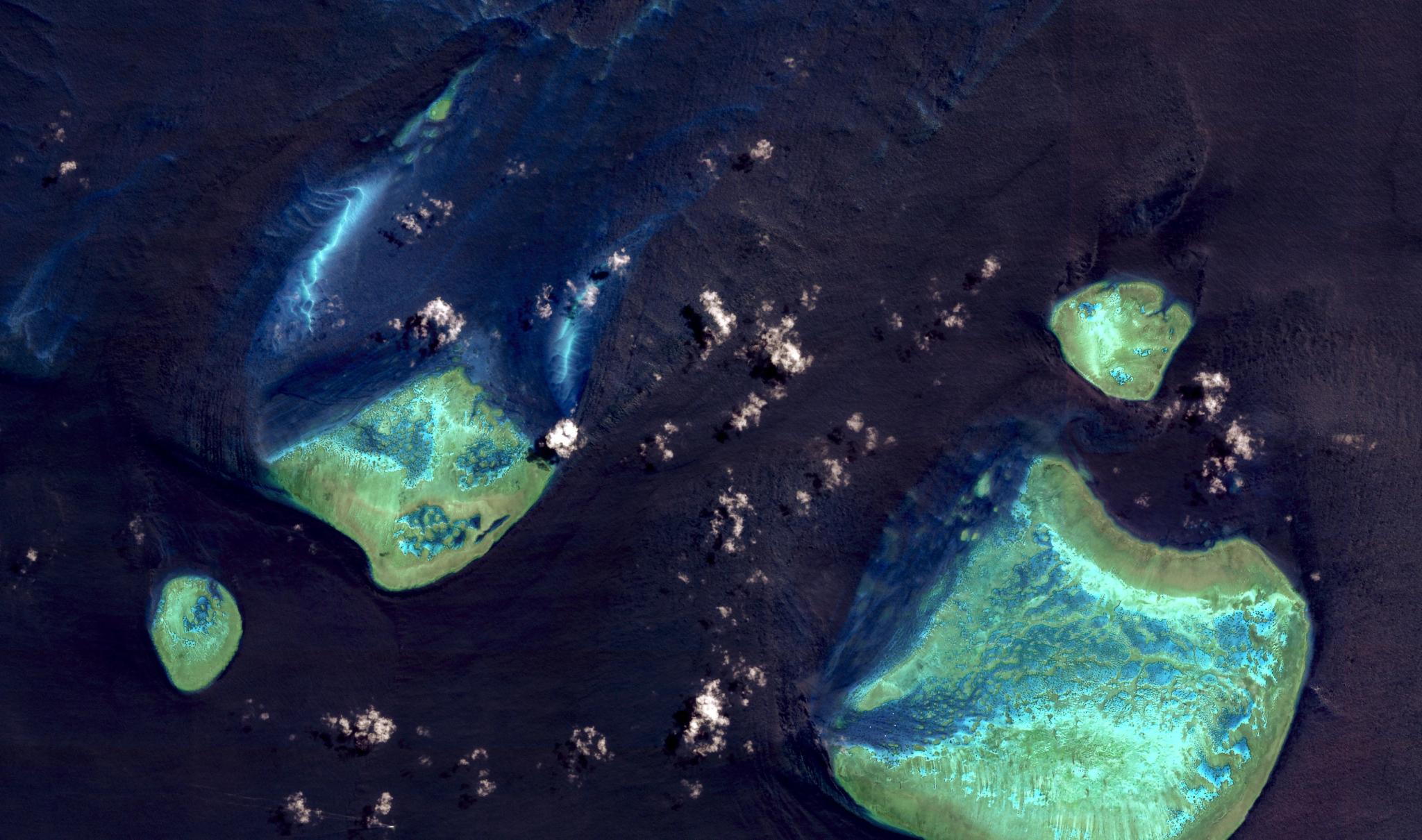
PlanetScope image of the Great Barrier Reef near Australia’s Whitsunday Islands, captured October 6, 2026. © Planet Labs 2026. All rights reserved.
NewsWe’re excited to share the first light imagery from Tanager-2 and SuperDove Flock 4J, which marks a significant milestone for these satellites that launched earlier this month. Tanager-2, our second hyperspectral satellite developed in partnership with Carbon Mapper, captured first light imagery of Spain on October 7, just six days after its October 1 launch.
A SuperDove in Flock 4J also took an image of Australia’s Great Barrier Reef within a week of launch, on October 6. These images demonstrate that the satellites are healthy and progressing through commissioning. Applying lessons learned from 40 successful launches of over 700 satellites, we’ve streamlined the time from build to launch to contact and imaging, quickly providing significant value for our partners, and our customers.
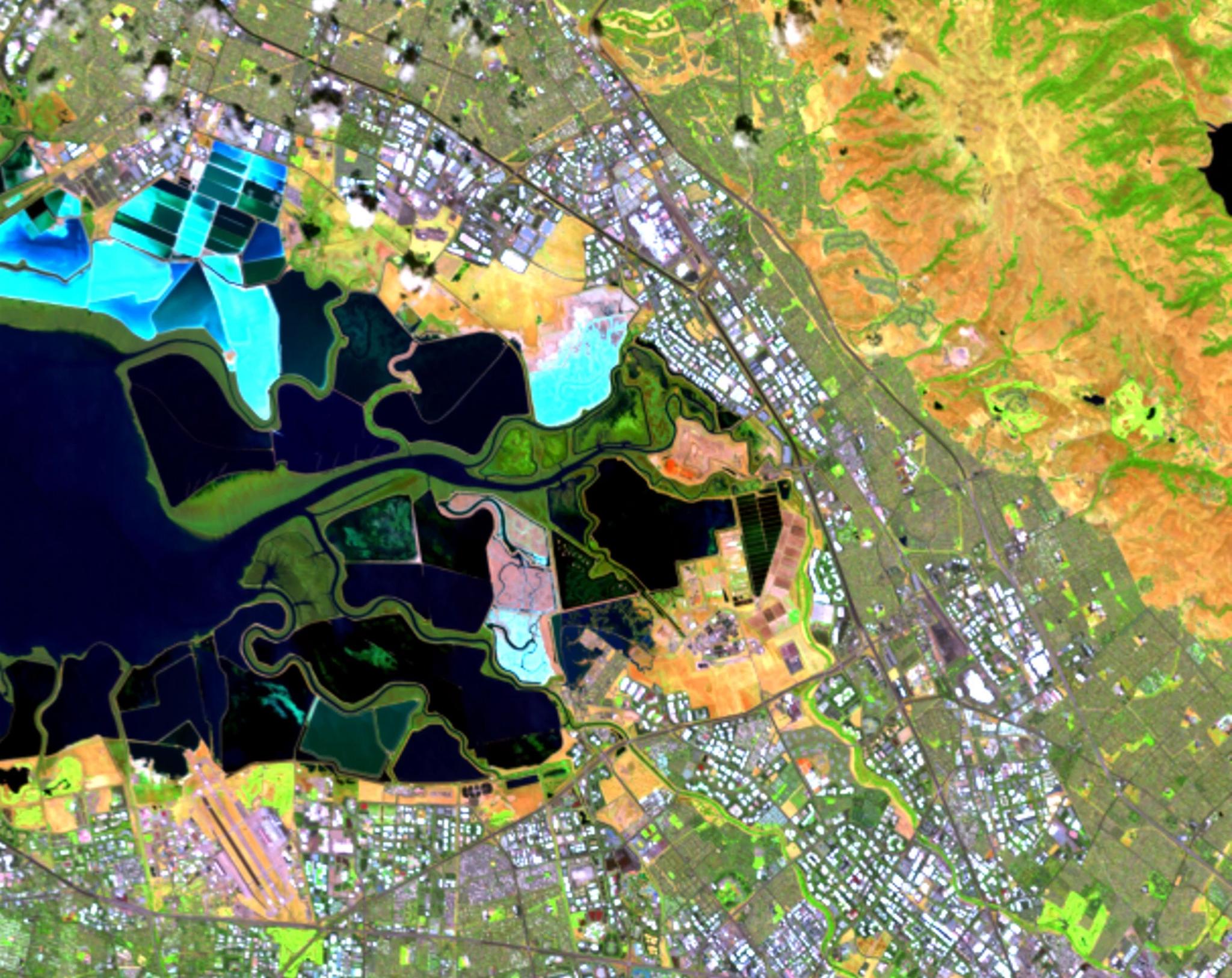
On October 7, Tanager-2 captured its first light image over Spain’s Pink Lake in Torrevieja, a salt lagoon with a distinctive, colorful appearance. This high-salinity lake gets its vivid pink hue from the Halobacterium and micro-algae that thrive there.
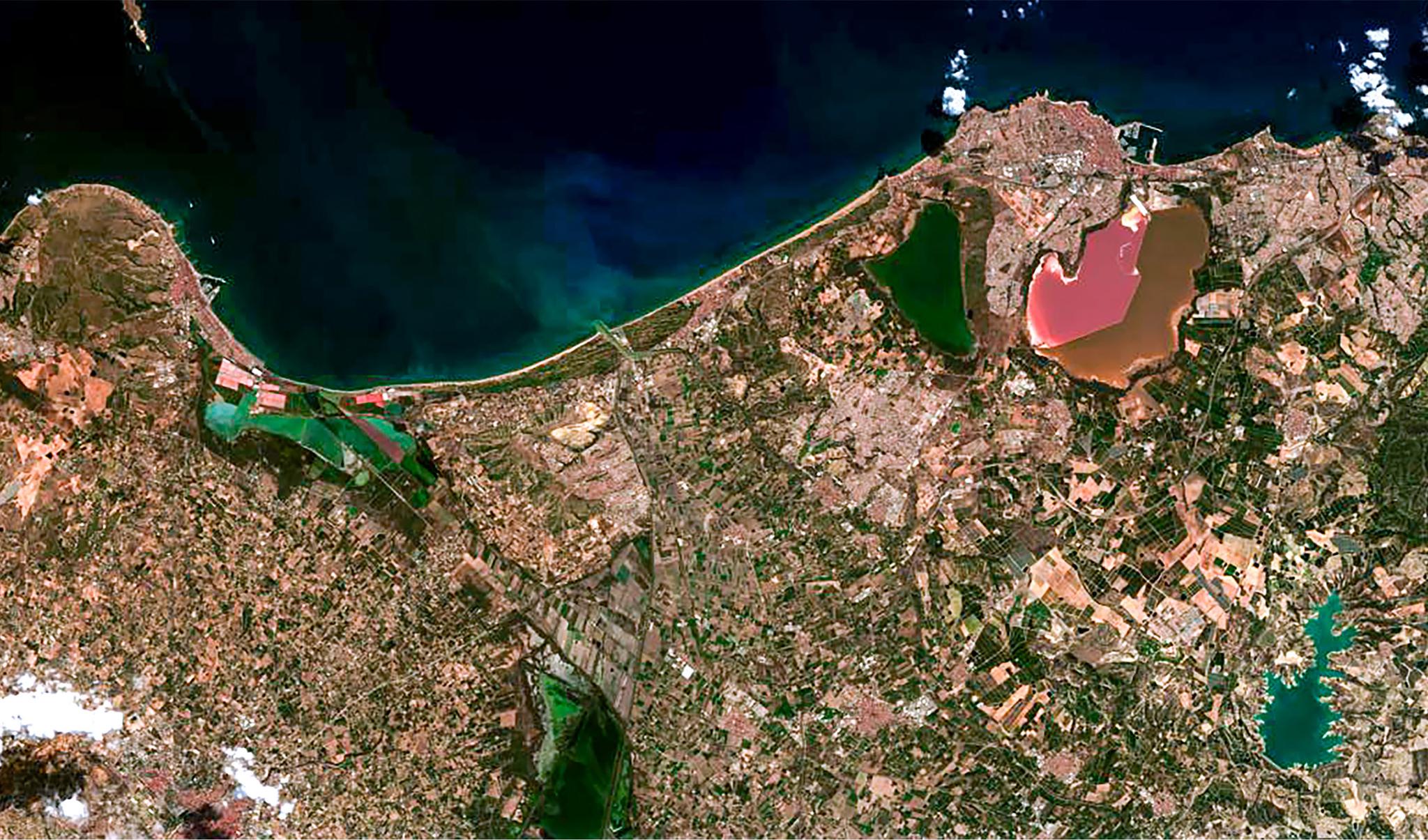
Tanager-2 image of the Pink Lake in Torrevieja, Alicante, Spain, captured on October 7, 2026.
Using data gathered by Tanager-2, Carbon Mapper detected a large methane plume over the coast of Spain on October 7, 2026. This data and the Pink Lake image above are both part of a single larger capture, showing Tanager-2’s ability to simultaneously support multiple applications in adjacent locations.
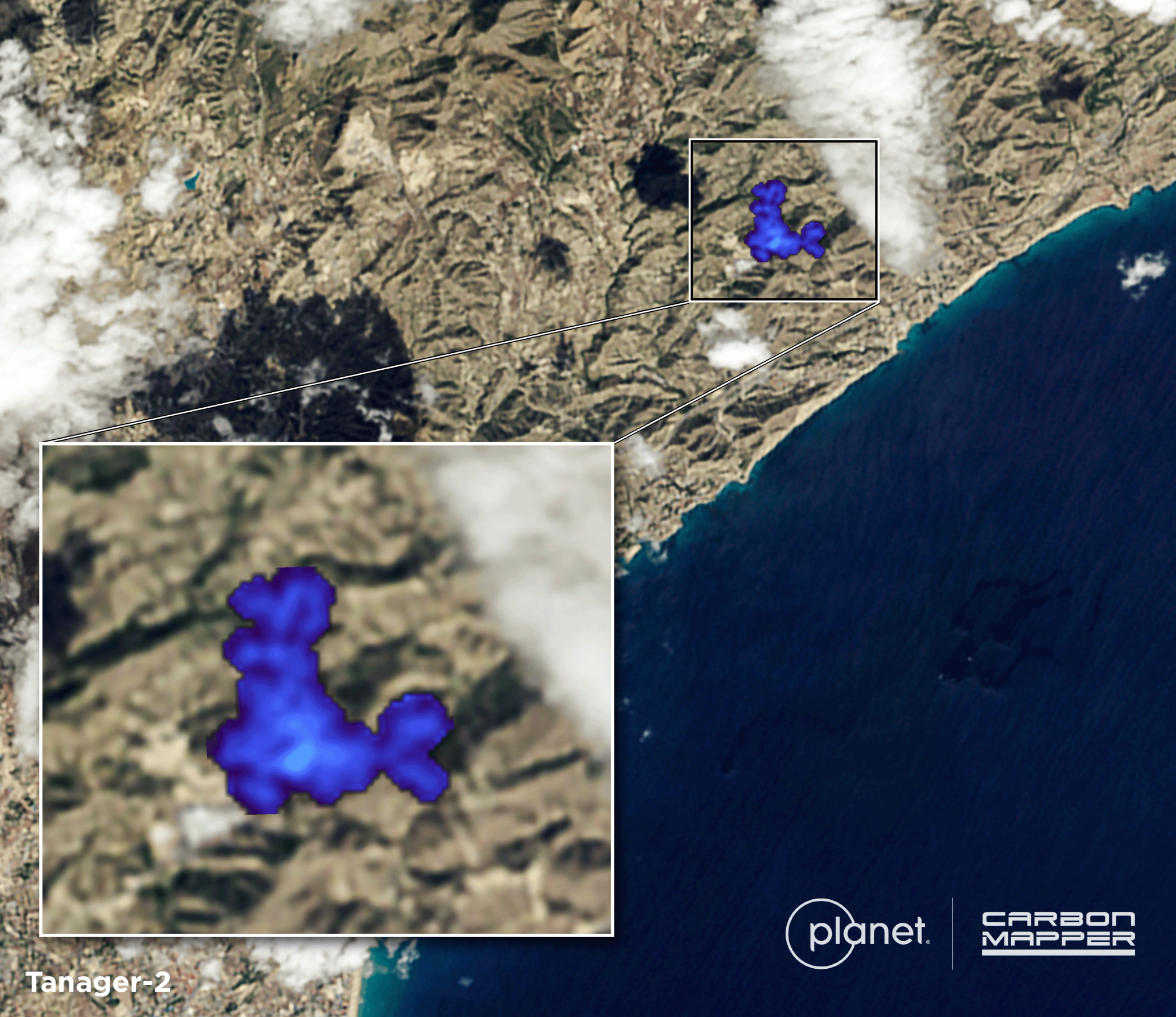
A large methane plume over Spain’s coast, detected by Carbon Mapper using Tanager-2 data from October 7, 2026.
A SuperDove from Flock 4J captured imagery of Australia’s Great Barrier Reef on October 6.
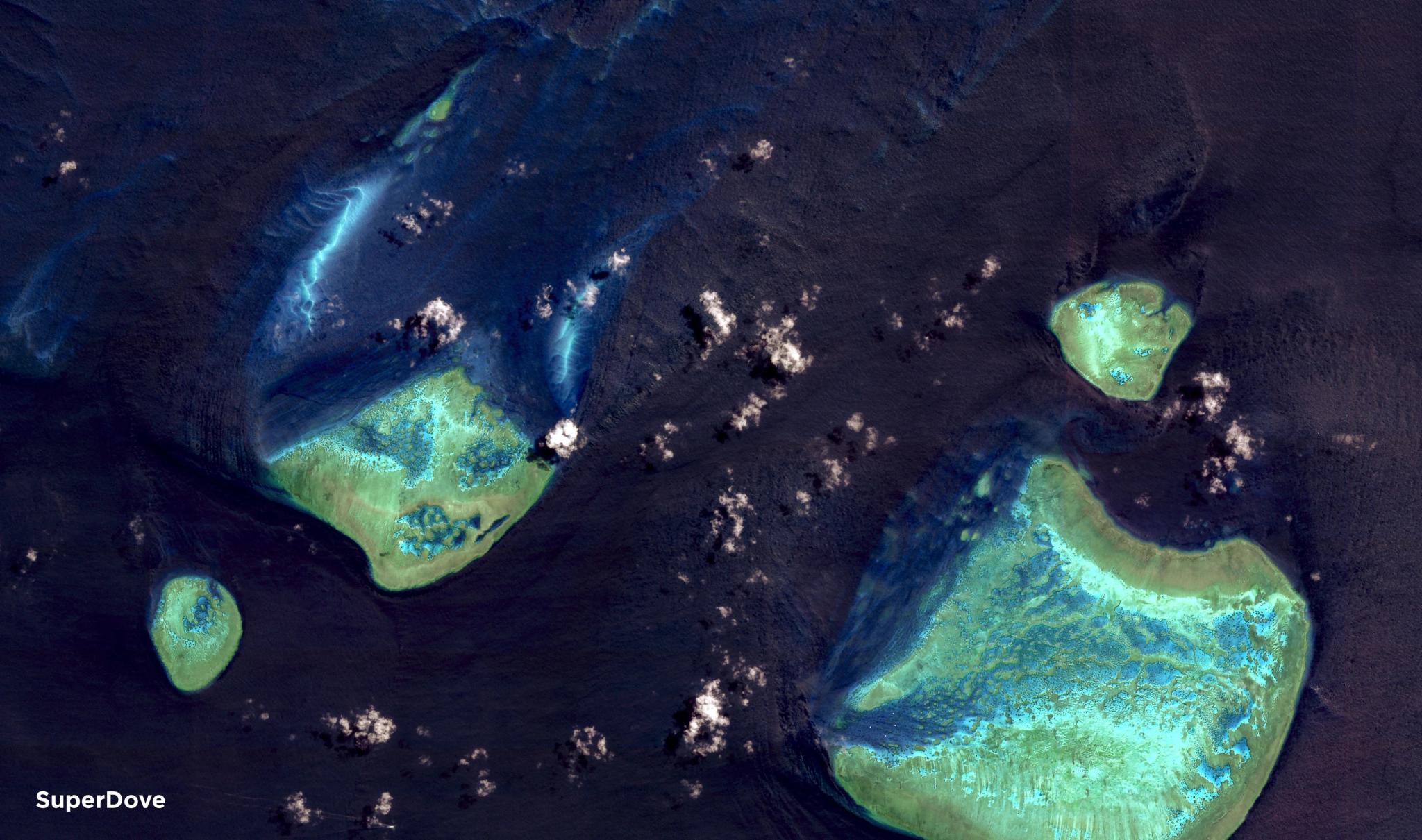
First light imagery for SuperDove Flock 4J, showing the Great Barrier Reef near Australia’s Whitsunday Islands. Captured by a SuperDove on October 6, 2026.
"Seeing first light from Tanager-2 just six days after launch is a proud moment for the team as it builds on the great success of Tanager 1 and marks the start of a true Tanager constellation," said James Mason, Chief Space Officer at Planet. "We’ve also received first light imagery from our latest flock of SuperDoves which will immediately contribute to our daily PlanetScope monitoring mission. At Planet we want to collect every bit of information we can about our changing planet. The SuperDoves look broadly, seeing everywhere, while the Tanagers look deeply, understanding the very chemical nature of the Earth’s surface and its atmosphere. Scaling up the Tanager constellation will enable our partners and customers to expand critical missions from global methane emissions detection to biodiversity tracking to mineral prospecting, and we can’t wait to see entirely new applications emerge as the global hyperspectral dataset grows and is unlocked with geospatial AI."
Tanager-2: The Future of Hyperspectral Monitoring
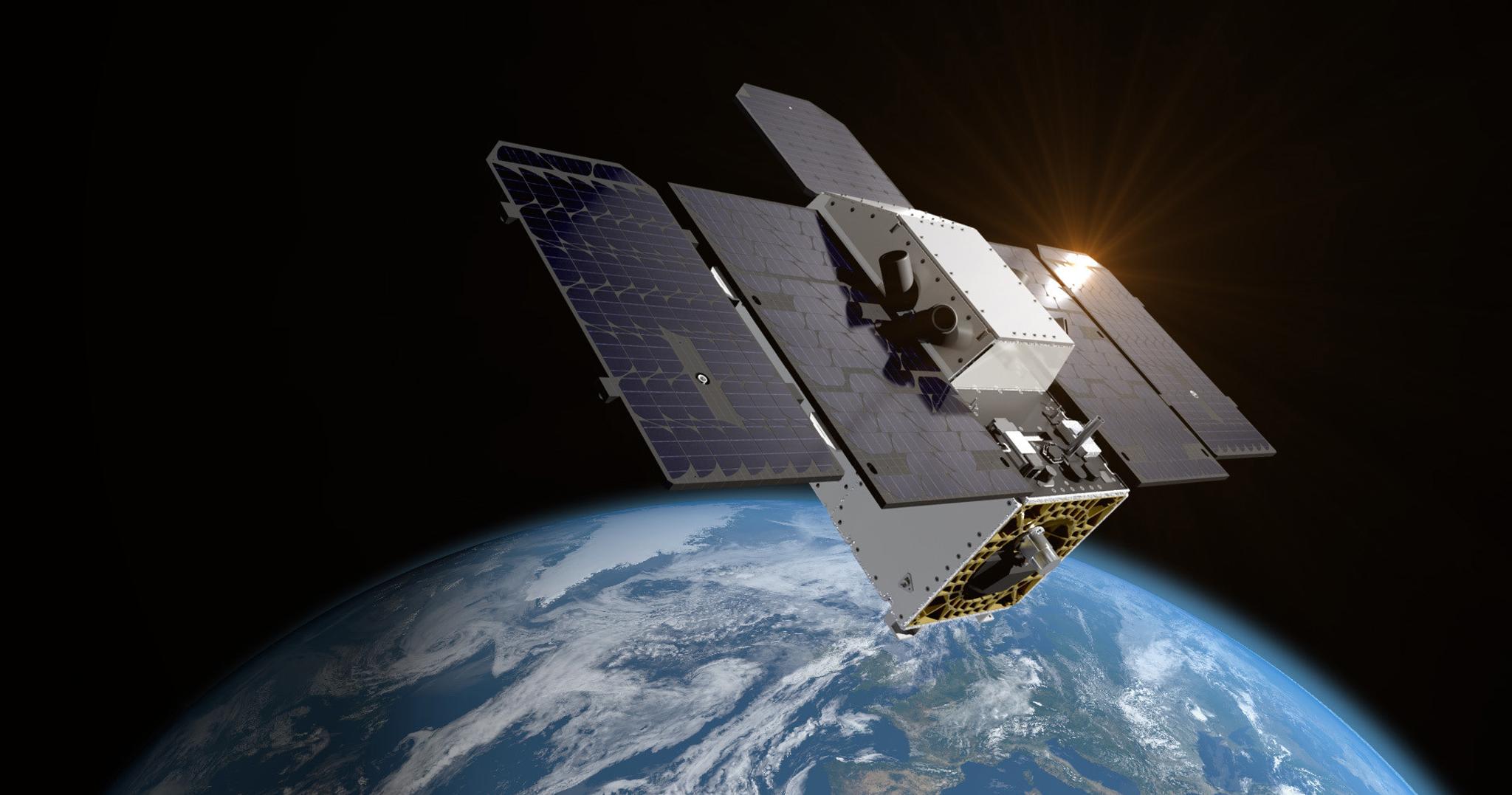
Tanager-2 is the second satellite in the growing Tanager constellation. The second spacecraft will roughly double Planet’s hyperspectral monitoring capacity, providing even more opportunities to detect and respond to relevant global changes. Tanager-2 aims to build on Tanager-1’s many successes in orbit, empowering timely greenhouse gas mitigation efforts and supporting a broad range of other hyperspectral applications such as water and air quality analysis, exploration for rare earth elements (REEs), invasive species detection, forest health assessment, wildlife habitat preservation, and more. Tanager-2 is also intended to support advanced collection modes, including glint tasking, which improves detection sensitivity of methane at offshore sites.
The growing constellation will also increase Planet’s ability to image in cloudy ecosystems like the Amazon, helping capture the impact of the changing climate on biodiversity and sensitive ecosystems. Hyperspectral Tanager data is integrated within Amazon.ia, a recently-announced digital public good initiative co-founded by Planet, intended to bring together diverse data types and AI-powered techniques to drive effective conservation and restoration across the Amazon. As part of Amazon.ia, Tanager data is used to support biodiversity monitoring efforts such as forest composition analysis.
As Tanager-2 completes commissioning and calibration, Carbon Mapper will leverage its data to make methane and CO2 observations available on its public portal.
Planet’s Agile Aerospace Capabilities
In collaboration with Carbon Mapper, Planet plans to build and deploy at least three more Tanager satellites after Tanager-2, to continue scaling the fleet. More information about Tanager’s capabilities can be found on our website.
This latest multi-constellation launch illustrates the value of Planet’s agile aerospace approach, which enables us to rapidly manufacture, launch and utilize new cutting-edge spacecraft. Each of the satellites we launched aboard SpaceX’s Transporter-18 rideshare mission on October 1, including the prototype for Google’s Project Suncatcher, are healthy and progressing through calibration. With more launches on the horizon across multiple constellations and with the recent opening of our state-of-the-art manufacturing facility in Berlin, we’re excited to accelerate our production and launch momentum, delivering value for our global customers every step of the way.
Visit our Constellation Services webpage to learn more about how our unique capabilities support critical missions and sovereign capabilities for a diverse array of customers.
Forward-Looking Statements
Certain statements contained in this blog are “forward-looking statements” about Planet within the meaning of the securities laws, including statements about the expansion of the high resolution capacity of Planet’s fleet, the delivery of such capacity to Planet customers, and the Company’s ability to realize any of the potential benefits from product and satellite launches, either as designed, within the expected time frame, in a cost-effective manner, or at all. Such statements, which are not of historical fact, involve estimates, assumptions, judgments and uncertainties. There are a number of factors that could cause actual results or outcomes to differ materially from those addressed in the forward-looking statements, including risks related to the macroeconomic environment. Such factors are detailed in Planet’s filings with the Securities and Exchange Commission, including our most recent Annual Report on Form 10-K and Quarterly Reports on Form 10-Q. Planet does not undertake an obligation to update its forward-looking statements to reflect future events, except as required by applicable law.